
How to Choose a Baby Stroller: The Safety Checks Parents Should Never Skip
5 Crucial Safety Features to Look for Before Buying Your Next Stroller

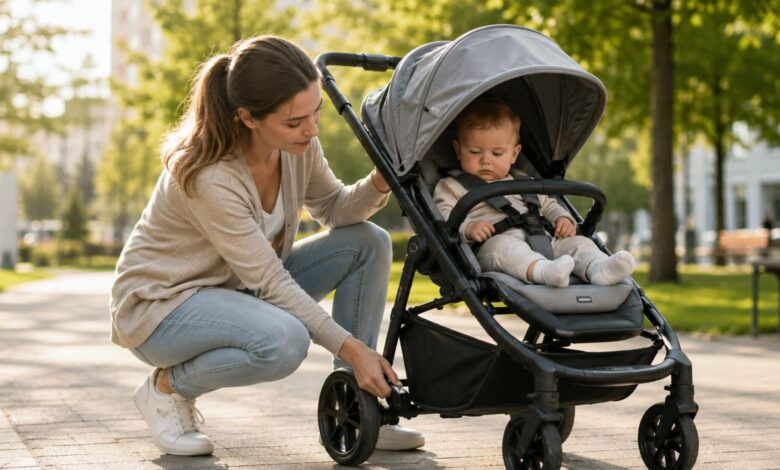
The right stroller is not the one with the most features—it is the one that fits your baby, your routine and the places you actually go.
Choosing a baby stroller can look like a battle of brands, colours and clever accessories. The more useful question is simpler: Will this stroller remain safe, stable and practical throughout your child’s intended stage of use?
Safety should come before storage capacity, style or price. The American Academy of Pediatrics recommends features including a five-point harness, an easy-to-use brake system and a wide base that helps reduce tipping.
A safe baby stroller should match your child’s age and size, have an appropriate five-point harness, secure brakes, strong stability, a reliable locking mechanism and a suitable seat position. Check its weight and age limits, test the fold and brakes, and choose features around your daily travel rather than buying the most complicated model.
Start With Your Baby, Not the Brand
The first filter is age, size and developmental stage. A stroller intended for a newborn must provide a manufacturer-approved position suitable for that age; some models require a compatible carrycot or bassinet rather than using the standard seat.
Check the manufacturer’s minimum and maximum weight limits before purchase. Never assume that a stroller is suitable for a newborn simply because its seat reclines.
For every ride, use the restraint system. The AAP recommends a five-point harness with straps across the shoulders, hips and between the legs.
The Five Checks That Matter More Than Features
| What to check | What good looks like |
|---|---|
| Harness | Secure five-point restraint |
| Brakes | Easy to operate and firmly locking |
| Base | Wide and stable |
| Folding lock | Frame stays securely open |
| Weight limit | Clearly stated and appropriate |
Stability deserves particular attention. The AAP recommends a stroller with a wide base and warns that bags hanging from the handle can make a stroller tip backwards.
Test the brake yourself. If it is awkward to engage, difficult to release or fails to hold the stroller firmly, choose another model.
A folding stroller should lock securely when opened. Keep a child’s fingers away from hinges and moving parts during folding and unfolding.
Your Lifestyle Should Decide the Design
A lightweight travel stroller can make sense for frequent public transport or air travel. A larger model with more substantial wheels may be preferable for uneven pavements, parks or longer walks.
Storage is useful, but low and well-positioned storage is safer than loading heavy bags onto the handle. Extra weight high on the frame can affect stability.
If you are buying a double stroller, inspect the footrest and seating arrangement carefully. The AAP specifically warns about foot entrapment risks in some side-by-side designs.
For UK shoppers, also check the product’s applicable safety information, warnings and instructions rather than relying solely on retailer descriptions.
Don’t Confuse a Stroller With a Sleep Space
A stroller is designed for transport, not as an unattended sleeping environment.
The CPSC warns that babies can become trapped in stroller openings and recommends using the harness every time. It also warns against leaving a child unattended in a stroller, particularly when the seat is reclined or flat.
Safety standards also matter. In the United States, federal stroller regulations incorporate ASTM F833 requirements covering areas including stability, brakes, restraints, folding mechanisms and structural integrity.
People Also Ask: What should I look for when buying a baby stroller?
A good baby stroller is one that fits the child’s age and size while providing secure restraint, effective brakes, stability and a dependable locking frame. Check manufacturer limits and instructions before purchase, then physically test the harness, brakes, wheels and folding mechanism.
People Also Ask: Is a five-point harness necessary on a stroller?
A five-point harness is a key stroller safety feature because it restrains the child at the shoulders, hips and between the legs. The American Academy of Pediatrics recommends using the harness whenever a child rides in a stroller, rather than relying on a front bar alone.
People Also Ask: How do I know if a stroller is safe?
A safe stroller is stable, locks securely when open, has effective brakes, appropriate restraints and clearly stated usage limits. Check for current safety information, follow the manufacturer’s instructions and look for recalls where applicable. Safety certification or standards compliance should never replace careful everyday use.
The Best Stroller Is the One You Can Trust
A stroller should make everyday travel easier without creating new safety problems. Prioritise fit, restraint, stability and usability first; treat luxury accessories as secondary.
Safety principle: If you cannot confidently explain how the stroller locks, brakes, restrains your baby and supports their intended stage of development, keep shopping.
Disclaimer: Product specifications, safety requirements and recommendations can change by market and model. Always verify the latest manufacturer instructions, applicable regulations and recall information before purchasing or using a baby stroller.