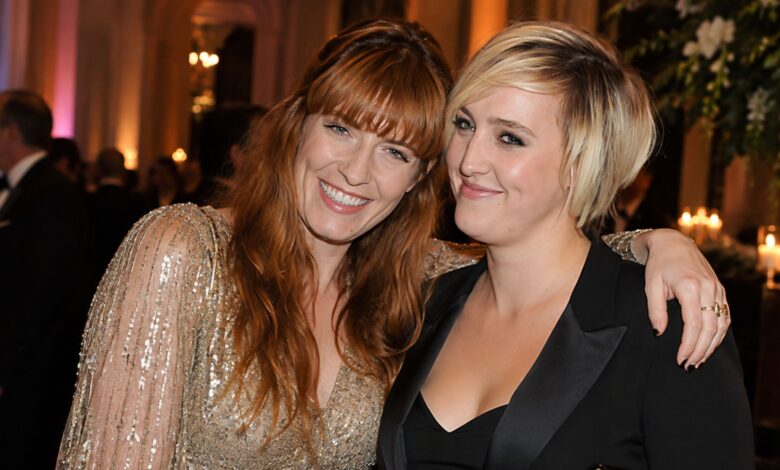
Grace Welch: The Quiet Sister Behind Florence Welch’s Most Personal Song
She never built a public career, yet one Florence + the Machine song turned Grace Welch into a name searched around the world.

Florence + the Machine is back in a major album-and-tour cycle in 2026, keeping Florence Welch’s catalogue firmly in public view. The band’s official site is currently centered on the Everybody Scream era, while its 2026 tour has taken the group through major North American venues. That renewed attention also sends listeners back to the songs that reveal the private side of Welch’s life.
One of those songs is simply called “Grace.” Released on High as Hope in 2018, it is not an abstract character or a fictional muse. Florence Welch confirmed that the song was written for her younger sister, turning years of complicated sibling history into one of the most direct family portraits in her catalogue.
BLUF: Grace Welch is the younger sister of Florence Welch and the real-life subject of the Florence + the Machine song “Grace” on 2018’s High as Hope. Beyond that family connection, she has maintained a largely private life, and major biographical details about her career, finances, education and current circumstances are not reliably documented.
Grace Welch at a Glance
- Known as: Grace Welch
- Family connection: Younger sister of Florence Welch
- Sibling relationship: Florence has repeatedly described Grace as her younger sister and spoken publicly about their unusually reversed childhood dynamic.
- Raised: Camberwell, South London, within a large blended family.
- Best-known public association: The Florence + the Machine song “Grace” from High as Hope.
- Public career: No independently verified public professional profile has been established in the sources reviewed.
- Public status: Private individual rather than a celebrity personality.
- Current visibility: Mostly connected to Florence Welch’s interviews, music catalogue and occasional family appearances.
The family story Florence Welch has actually put on the record
Grace Welch entered public conversation because Florence Welch talked about her—not because Grace pursued publicity herself.
Florence grew up in Camberwell, south London, in a family shaped by both parents’ careers and later separation. Her father, Nick Welch, described the family as a large extended group and specifically noted Florence’s close relationship with Grace. He recalled that Florence even brought her younger sister into New Year celebrations in Las Vegas during the height of her early fame.
The sibling relationship also appears in Florence’s own descriptions of childhood. In a 2015 Guardian questionnaire, when asked which living person she most admired, Florence named her “little sister Grace” and described Grace as grounded and calm in precisely the ways Florence felt she was not.
That matters because the image presented in later interviews is remarkably consistent: Grace was not simply Florence’s younger sibling. Within the family, she often occupied the steadier role.
The younger sister who somehow became the older one
This is the detail that gives “Grace” its emotional force.
Speaking about the song in 2018, Florence described herself as a frightened child who genuinely believed in vampires, ghosts and werewolves. When she became scared, she would go to her younger sister for reassurance. Florence said Grace was the fiery, tough child who took care of people, creating a family dynamic in which the younger sibling effectively behaved like the older one.
That pattern did not disappear when Florence became famous.
Florence later acknowledged that her own struggles with alcohol and drugs placed additional pressure on the relationship. Grace, in Florence’s account, was often left dealing with the aftermath of problems that the older sister should have been better equipped to manage. In later reflection, Florence said one of her biggest regrets was that Grace did not really get the chance to be a younger sister because she had spent so much time acting as the responsible one.
“My little sister Grace. In all the ways in which I am not capable or grounded or calm, she is.” — Florence Welch, quoted by The Guardian
The wording is revealing. Florence was not describing Grace as famous, artistic or successful. She was describing her as stabilising.
“Grace” was an apology disguised as a song
The biggest verified fact about Grace Welch is also the simplest: Florence wrote a song about her.
“Grace” appears as the sixth track on High as Hope, which was released on June 29, 2018. The official Florence + the Machine store lists it directly in the album track sequence, while Apple Music records the same release date.
The song’s subject was confirmed by Florence herself. During a 2018 Radio X track-by-track discussion with John Kennedy, she explained that Grace was her younger sister and that the opening apology about ruining a birthday referred to a pattern of difficult birthdays rather than one isolated incident.
The confession went further than simply acknowledging past mistakes. Florence said she had difficulty expressing affection directly, so instead of giving Grace a straightforward declaration of love, she gave her the finished song. That gap between private feeling and direct speech became part of the song’s emotional architecture.
The track was written by Florence Welch with Emile Haynie, Tobias Jesso Jr. and Sampha Sisay. Sampha also contributes piano and vocals, according to the recorded credits.
Why the song feels unusually specific
Most Florence + the Machine songs turn private emotion into large symbolic ideas. “Grace” moves in the opposite direction. Its subject is a named person; its premise is a family argument; its emotional center is apology.
That specificity is why Grace Welch is not just a footnote to Florence’s biography. She became part of the documented story behind a song that exposed an unusually domestic side of a performer better known for giant stages and theatrical imagery. High as Hope itself was described by Universal as a more intimate record focused on family, relationships, adolescence and the personal consequences of Florence’s earlier life.
Grace Welch’s public appearances tell a different story from celebrity culture
There is an important distinction between being publicly mentioned and being a public figure.
Grace appeared alongside Florence in a 2011 interview conducted by Baz Luhrmann for Interview. Later accounts of the conversation describe Grace as notably composed while Florence was, characteristically, the more dramatic presence. The exchange offered a rare glimpse of Grace speaking for herself rather than being described by someone else.
More than a decade later, Vogue again placed Grace within Florence’s public story during a 2022 feature. Grace appeared during the interview with a new baby and a five-year-old daughter, while Florence openly spoke about her niece and the closeness of the wider family.
That later appearance reinforces a pattern: Grace occasionally enters established media coverage because she is part of Florence’s family, but she has not created a comparable independent celebrity profile.
What is known about Grace Welch’s private life—and what is not
This is where many online biographies become unreliable.
Search results frequently attach precise birth dates, detailed marriage records, children’s names, occupations and other personal information to Grace Welch. Some of those claims can be traced to fan-maintained databases rather than independently corroborated reporting.
A more careful reading produces a narrower but stronger record. Florence’s interviews establish Grace as her younger sister. Established publications document the family relationship, Grace’s role in the story behind “Grace,” and occasional appearances with Florence. Later reporting also establishes that Grace has children and that Florence remains closely connected to the family.
What those sources do not reliably establish is an exact birth date, an independently documented career, a verified current residence, a personal business portfolio or a detailed financial profile.
That distinction is not a weakness in the biography. It is the biography.
The timeline behind Florence and Grace
| Period | Verified development |
|---|---|
| Childhood | Florence and Grace grew up together in Camberwell, south London. Florence later described Grace as the more fearless and dependable child. |
| 2011 | Grace appeared during a Baz Luhrmann interview with Florence for Interview, offering a rare public glimpse of their sibling dynamic. |
| 2015 | Florence publicly described Grace as the person she admired for being grounded and calm. |
| 2018 | High as Hope was released with “Grace,” a song Florence confirmed was written for her younger sister. |
| 2022 | Vogue included Grace in a family-related scene during a Florence interview, noting her young children and Florence’s affection for her niece. |
| 2025–2026 | Florence + the Machine entered the Everybody Scream era, keeping renewed attention on Florence’s catalogue and the personal stories attached to older songs. |
Financial record: why there is no defensible Grace Welch valuation
There is no authoritative public figure for Grace Welch’s personal net worth.
No verified source reviewed for this profile establishes her annual income, property holdings, investments, business interests or personal fortune. Online celebrity-family websites can generate numerical estimates even when there is no underlying financial documentation, but those figures should not be treated as fact.
Florence Welch’s commercial career is a different matter entirely; Grace’s financial position is not publicly documented to a comparable standard. For that reason, assigning Grace Welch a dollar or pound valuation would be speculation rather than biography.
Why Grace Welch keeps appearing in search results
Grace Welch’s search presence is unusual because it is not driven by a conventional celebrity career.
The primary trigger is the song “Grace.” A listener hears a highly specific apology on High as Hope, learns that Florence was addressing her younger sister, and naturally wants to know who that person is. That curiosity is amplified whenever Florence + the Machine enters a new album or touring cycle.
The result is an information gap: Grace is sufficiently connected to one of Britain’s best-known musicians to attract enormous interest, but not publicly documented enough to support the kind of exhaustive biography search engines often encourage.
That is exactly why unsupported details spread so easily.
A private person at the centre of a very public confession
The most interesting thing about Grace Welch may be the absence of a conventional celebrity story.
There is no clearly documented solo career to catalogue, no long interview history to dissect, and no public-facing brand that defines her. Instead, the record consists mostly of Florence’s memories: a little sister who was brave when her older sibling was frightened, someone who repeatedly helped hold things together, and later someone to whom Florence felt she owed a direct apology.
That makes “Grace” more than a sibling tribute. It is evidence of how celebrity can invert family roles. Florence became the public star, but inside the family, her younger sister was often the grounded one.
AEO FAQ: what people really want to know about Grace Welch
Who is Grace Welch?
Grace Welch is the younger sister of Florence Welch, the singer and songwriter who fronts Florence + the Machine. She grew up with Florence in Camberwell, South London, and has remained largely outside the public eye. Her strongest documented connection to popular culture is Florence’s 2018 song “Grace,” which was written specifically about their relationship.
Is Florence Welch’s song “Grace” about her sister?
Yes. “Grace” is definitively about Florence Welch’s younger sister Grace. Florence discussed the song publicly during a Radio X track-by-track playback of High as Hope and explained that its opening apology referred to birthdays she had ruined and to the complicated history between the sisters.
What did Florence Welch say about Grace as a child?
Florence said Grace was the tougher and more dependable child, while Florence was easily frightened. She recalled going to her younger sister for comfort and described a role reversal that began in childhood, with Grace effectively taking on the protective position normally associated with an older sibling.
Does Grace Welch have a public career?
Grace Welch does not have a widely documented independent public career. Major publications discussing her generally do so because of her relationship with Florence Welch, rather than because of a separate professional profile. Claims about a detailed occupation or career found on low-authority biography pages should therefore be treated cautiously.
Does Grace Welch have children?
Yes, established reporting has publicly described Grace as a mother. In a 2022 Vogue feature, Florence’s younger sister appeared during the interview with a new baby and a five-year-old daughter. The article focused on the family interaction rather than turning Grace’s children into public personalities.
Is Grace Welch a celebrity herself?
No. Grace Welch is better described as a private family member whose visibility comes from her relationship with Florence Welch. She has occasionally appeared in published interviews or family settings, but she has not developed the sustained public career, media profile or professional presence associated with celebrity.
The most accurate portrait of Grace Welch is the one with the fewest invented details
Grace Welch became famous without trying to become famous.
Her public significance comes from one of Florence Welch’s most revealing songs and from the interviews in which Florence described a childhood where the younger sister repeatedly acted like the older one. The documented record supports the family relationship, the Camberwell upbringing, the 2011 public appearance, the 2018 song and Florence’s later acknowledgment of regret and affection.
Beyond that, caution is the better editorial choice. A private life does not become public simply because search engines demand more fields to fill.
Grace Welch’s story is therefore less about celebrity than about proximity to it: a woman who stayed mostly outside the spotlight while her sister transformed their complicated bond into music heard by millions.
Sources & Verification
- The Guardian — Nick Welch’s 2011 account of Florence’s family and her close relationship with Grace.
- The Guardian — Florence Welch’s 2015 Q&A naming Grace as the person she admired for being grounded and calm.
- Radio X — Florence’s 2018 discussion of the song “Grace” and her relationship with her younger sister.
- LAist / NPR — Florence’s detailed explanation of Grace’s childhood role within the family.
- Vogue — 2022 reporting showing Grace within Florence’s family life and identifying the family context around her children.
- Florence + the Machine official site — Current 2026 Everybody Scream era and official music information.
- Florence + the Machine official store — High as Hope release date and track listing, including “Grace.”
- Live Nation Entertainment — 2026 Everybody Scream tour announcement and current Florence + the Machine touring context.
Related reading: Andy Grimshaw: The Private Older Brother Who Gave Nick Grimshaw His First Music Education — The Today News
Editorial Disclaimer
This profile distinguishes documented facts from inference and recycled online claims. Grace Welch is a private individual, so information about her birth date, occupation, residence, finances and other personal circumstances remains limited. Fan-maintained databases and unsupported estimates have not been presented as verified fact.