
Peter Cullen Net Worth: Career, Biography, Death and the Voice of Optimus Prime

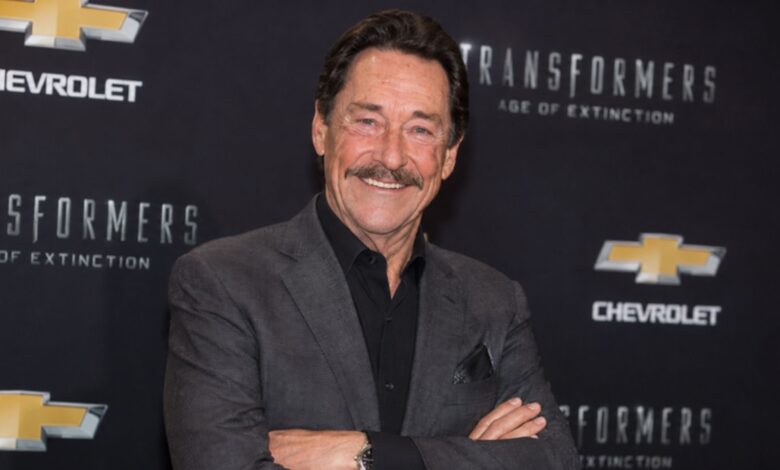
Peter Cullen was the Canadian voice actor whose deep, measured delivery became inseparable from Optimus Prime, the leader of the Autobots in the Transformers franchise. He also gave Eeyore his familiar melancholy voice, portrayed K.A.R.R. in Knight Rider, and contributed vocal work to films and animated productions ranging from King Kong to Predator. Cullen died on August 26, 2026, at his Los Angeles home at the age of 85, according to reports from the Associated Press, The Washington Post and People. His cause of death was not disclosed in those reports.
The financial question surrounding his death is less certain. A widely circulated published estimate placed Peter Cullen’s net worth at $6 million, but that figure comes from a celebrity-finance estimate rather than an audited financial statement or public estate accounting. No reliable public record reviewed for this article establishes the exact value of Cullen’s assets at the time of his death.
Peter Cullen Net Worth: How Much Was He Worth?
The most commonly cited figure for Peter Cullen’s net worth is $6 million.
Celebrity Net Worth listed the estimate at $6 million in a March 1, 2026 update. The site attributes Cullen’s wealth largely to his decades of work as a voice actor and performer, particularly his long association with Transformers.
That figure should be treated as an estimate, not a verified financial fact. Cullen’s contracts, residual income, investment holdings, property interests, royalties and other private financial arrangements were not comprehensively disclosed in public records. His estate value following his death on August 26, 2026, has also not been publicly established.
Several weaker biography and celebrity websites repeat the same $6 million number, but repetition does not independently verify it. The strongest responsible description is therefore that $6 million was a published estimate of Cullen’s net worth, not an officially documented fortune.
Who Was Peter Cullen?
Peter Claver Cullen was born in Montreal, Quebec, on July 28, 1941.
His professional education came through the National Theatre School of Canada. The school’s alumni directory identifies Cullen as an Acting graduate from the class of 1963.
His route into entertainment began well before the character who eventually defined his career. Cullen worked in radio and television and appeared in programs including The Sonny & Cher Comedy Hour and The Hudson Brothers Razzle Dazzle Show. These early performances helped develop the timing and vocal control that later became central to his animation work.
By the time he entered the American animation market, he had already accumulated substantial experience as a performer and announcer.
How Peter Cullen Became the Voice of Optimus Prime
Cullen first voiced Optimus Prime in the original Transformers animated series in 1984.
The voice did not emerge from an elaborate fictional exercise. Cullen repeatedly explained in interviews that his inspiration came from his older brother Larry, a Marine Corps officer and Vietnam veteran.
Speaking to Maxim in 2007, Cullen recalled reading the casting description for Optimus Prime and recognizing the character as a leader. The qualities described reminded him of Larry, so he incorporated an impression of his brother into the audition.
Cullen gave a similar explanation in later interviews, describing Larry as an important influence on both the sound and moral character of Optimus. The Los Angeles Times also recorded Cullen discussing how his brother’s military service and personality affected the performance.
That choice became one of the defining examples of character voice acting in modern animation. Optimus Prime sounded authoritative without being simply aggressive. Cullen’s performance emphasized command, restraint and sincerity, giving the Autobot leader a distinctly human quality despite the character being a transforming machine.
Why Optimus Prime Became Cullen’s Signature Role
When Cullen recorded the original series, there was no obvious reason to expect that Optimus Prime would become a multigenerational cultural character.
The role nevertheless survived changes in animation, technology and audience. Cullen returned for The Transformers: The Movie in 1986 and later reprised Optimus in subsequent Transformers television projects, video games and major live-action productions.
His return to the franchise became particularly important with Michael Bay’s 2007 Transformers film. Cullen’s voice connected the new movie interpretation with the character many viewers already knew from the 1980s series.
The Associated Press described his Optimus performance as one that helped establish the character as a central figure in a franchise that eventually grew into a multibillion-dollar film business.
For Cullen, however, the role represented more than a successful casting decision. In interviews he described Optimus as a character modeled on qualities he admired in his brother.
Peter Cullen and Eeyore
Optimus Prime was Cullen’s best-known role, but Eeyore demonstrated his range in a completely different way.
Cullen voiced the gloomy donkey in Disney’s The New Adventures of Winnie the Pooh and returned to the character in later Pooh productions. His Eeyore was deliberately understated, with a slow, resigned rhythm that contrasted sharply with Optimus Prime’s command.
The difference between the two performances is one of the clearest ways to understand Cullen’s craft. His career was not built solely around having a naturally deep voice. He used rhythm, pacing and vocal texture to create characters with very different personalities.
His wider credits included animated productions such as DuckTales, G.I. Joe, The Jetsons and Chip ‘n Dale: Rescue Rangers.
Peter Cullen’s Other Famous Roles
Cullen’s résumé reached well beyond Transformers and Winnie the Pooh.
Among his notable screen and voice performances were:
- K.A.R.R. in Knight Rider — the hostile counterpart to K.I.T.T.
- King Kong in the 1976 film King Kong — Cullen supplied the voice of the giant ape.
- Predator in Predator (1987) — he contributed the creature’s distinctive vocal effects.
- Monterey Jack in Chip ‘n Dale: Rescue Rangers and related productions.
- Thaedus in Invincible, extending his television work into a much later phase of his career.
His catalogue illustrates why describing him only as “the voice of Optimus Prime” understates his contribution. Optimus made his name internationally recognizable, but Cullen spent decades working across animation, film, television, commercials, games and other forms of voice performance.
Peter Cullen’s Education and Early Career
Cullen belonged to the first generation of graduates from Canada’s National Theatre School. The school’s official alumni directory records his 1963 Acting graduation.
Before establishing himself as a prominent American voice actor, he worked in Canadian broadcasting and developed experience in live performance and announcing.
Those years mattered because professional voice acting depends heavily on skills that are not unique to animation: microphone technique, timing, breath control, vocal consistency and the ability to communicate character without relying on facial expression.
Cullen eventually brought those abilities into American television animation, where the medium offered him opportunities to create multiple characters within the same broad period of his career.
Peter Cullen’s Brother Larry and the Meaning Behind Optimus Prime
Larry Cullen occupies an unusual place in Peter Cullen’s professional story because the connection was publicly described by Cullen himself rather than inferred from family photographs or secondhand biography pages.
Cullen said Larry was a Marine Corps officer and a major personal influence. When he auditioned for Optimus Prime, he drew on his brother’s qualities and voice rather than trying to create a stereotypical shouting action hero.
In one interview, Cullen said the character reminded him of Larry and that he attempted to reproduce not only his brother’s sound but the qualities he associated with him.
That distinction helps explain why the Optimus performance developed its particular tone. The character’s authority comes from confidence and moral seriousness instead of constant aggression.
Did Peter Cullen Receive a Lifetime Achievement Award?
Yes.
The National Academy of Television Arts and Sciences presented Peter Cullen with a Lifetime Achievement Award at the second Children’s & Family Emmy Awards in 2023. The official Emmy program identifies Cullen as the recipient of the honor.
The recognition arrived after decades of work in children’s and family entertainment and formally acknowledged a career that had extended far beyond a single series.
It also came at a point when Cullen’s signature character had already been familiar to several generations of viewers.
Did Peter Cullen Die?
Yes. Peter Cullen died on August 26, 2026, at age 85.
The Associated Press reported that Cullen died at his Los Angeles home. The Washington Post separately reported that his agent, Kevin Motley, said Cullen died peacefully surrounded by family. The cause of death was not disclosed.
People also reported his death at age 85 and said he was survived by four children.
Because his death is extremely recent, older pages that describe Cullen as living should no longer be treated as current biographical sources.
Peter Cullen’s Age at Death
Peter Cullen was 85 years old when he died.
He was born on July 28, 1941, and died on August 26, 2026, less than a month after his 85th birthday. His date of birth is consistently reported across major biographical databases and entertainment references, while the National Theatre School independently confirms his professional education.
Peter Cullen’s Family
Cullen was survived by four children, according to the Associated Press and People.
Because the available reporting surrounding his death is principally focused on his career and immediate family statement, this profile does not extend into unverified claims about private family circumstances, personal finances or undisclosed relationships.
How Peter Cullen Made His Money
Cullen’s income was built over a long professional career rather than a single clearly documented salary.
His work included animation, live-action television, film, commercials, games and long-running franchise appearances. Optimus Prime was especially important because he returned to the role repeatedly over many years.
His professional catalogue included both recurring characters and one-off vocal performances. That variety makes it difficult to reconstruct a precise lifetime income figure from public records.
There is no authoritative public accounting showing how much Cullen earned from the individual Transformers films, television series, games or merchandise-related arrangements. Claims assigning exact salaries or royalty totals therefore should not be presented as established facts.
The most defensible figure available for readers researching Peter Cullen net worth remains the published $6 million estimate, with the important qualification that it is not independently audited.
Peter Cullen’s Final Years
Cullen continued working well into his 80s.
His later credits included appearances within the continuing Transformers universe and work on newer animated productions. His role as Thaedus in Invincible was an example of how his career continued to intersect with contemporary animation rather than existing only as a legacy from the 1980s.
That longevity is particularly notable in voice acting, where recognizable performers can return to signature characters while simultaneously developing new roles.
For Cullen, Optimus Prime remained the central thread. Yet his continued work showed that his professional identity was broader than one character.
Why Peter Cullen’s Voice Mattered
Cullen’s importance to popular culture can be measured less by the number of credits on a résumé than by the durability of one performance.
Optimus Prime has been repeatedly reinterpreted in animation, film and games, but Cullen’s original characterization provided a reference point for the character’s personality. His voice made Optimus sound like a leader rather than merely a large robot.
The performance also gave the franchise a bridge between generations. Viewers who first encountered the character in 1984 could hear the same fundamental vocal identity decades later in live-action cinema and newer Transformers productions.
That kind of continuity is rare in entertainment.
Peter Cullen’s Legacy After His Death
Peter Cullen’s death closes the career of a performer whose work was heard by audiences who may never have known his face.
For millions of viewers, his voice meant Optimus Prime. For another audience, it meant Eeyore. Others encountered him as K.A.R.R., the Predator, King Kong or one of the many characters scattered throughout his television and game credits.
The National Academy of Television Arts and Sciences’ 2023 Lifetime Achievement Award provided a formal recognition of that breadth. His death in 2026 brings renewed attention to a career that began on Canadian radio and television and eventually became part of one of the world’s most durable entertainment franchises.
The financial number associated with his name may remain an estimate, but the professional record is much clearer: Peter Cullen built more than six decades of work around one of the most recognizable voices in animation.
Frequently Asked Questions About Peter Cullen
What was Peter Cullen’s net worth?
A published estimate placed Peter Cullen’s net worth at $6 million. This was an estimate rather than a verified public accounting of his wealth, so the exact value of his estate is not established.
When did Peter Cullen die?
Peter Cullen died on August 26, 2026, at the age of 85, according to major reports published following his death.
What was Peter Cullen famous for?
He was best known for voicing Optimus Prime in the Transformers franchise. He was also widely known for voicing Eeyore in the Winnie the Pooh franchise.
How old was Peter Cullen when he died?
Peter Cullen was 85 years old. He was born July 28, 1941, and died August 26, 2026.
What inspired Peter Cullen’s Optimus Prime voice?
Cullen said his older brother Larry, a Marine Corps officer, inspired both the voice and qualities he brought to Optimus Prime.
Did Peter Cullen receive an Emmy?
Yes. The National Academy of Television Arts and Sciences honored him with a Lifetime Achievement Award at the 2023 Children’s & Family Emmy Awards.
Was the $6 million net worth figure officially confirmed?
No. The $6 million amount is a published estimate. No reliable public financial document reviewed for this article independently confirms that exact figure.
Final Assessment
Peter Cullen’s career is unusually easy to recognize but harder to reduce to a single number.
The available evidence supports his identity as a Montreal-born Canadian actor and voice performer, his graduation from the National Theatre School of Canada in 1963, his creation of the defining English-language voice of Optimus Prime in 1984, his work as Eeyore and numerous other characters, his 2023 Lifetime Achievement Award, and his death at 85 on August 26, 2026.
The financial record is less definitive. $6 million is the most prominent published estimate for Peter Cullen’s net worth, but it should remain labeled as an estimate rather than presented as a confirmed estate value.
What is not uncertain is the voice. For generations of Transformers viewers, Peter Cullen gave Optimus Prime a sound that conveyed authority without losing humanity. That performance became the most enduring part of a career that stretched from Canadian broadcasting to some of the biggest animation and film properties of the modern era.
Source note: This article prioritizes current reporting from the Associated Press, The Washington Post and People, the National Theatre School of Canada’s alumni directory, official National Academy of Television Arts and Sciences material, and Cullen’s own remarks in established interviews. The supplied brief specifically requires people-first, evidence-based writing, transparent treatment of uncertainty and live verification rather than unsupported financial claims.