
Bumetro Explained: The Strange Keyword Linking Urban Mobility, Audio Meters, and an Office Chair

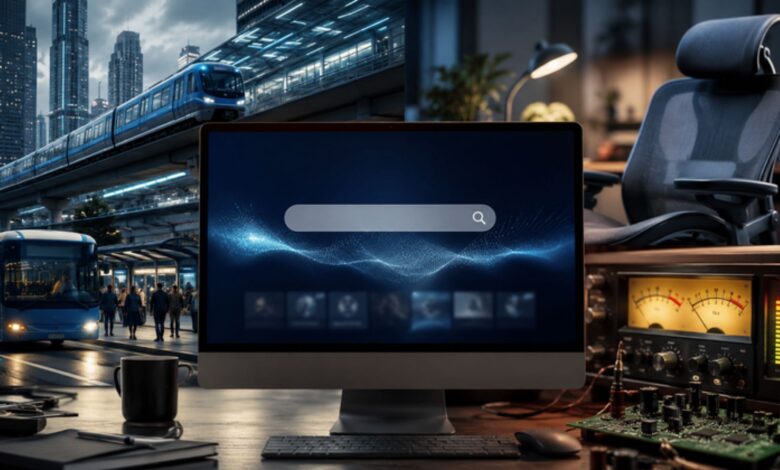
One unusual word is producing several completely different meanings online—and the evidence shows why context matters more than the keyword itself.
“Bumetro” looks like the name of a product, platform, or technical term. Recent search results, however, reveal something much more complicated: the word is being used across unrelated subjects, including smart transportation, electronics, audio projects, music, and even an office-chair product code.
That ambiguity matters because a searcher looking for a mobility service could easily encounter pages discussing VU meters, while someone searching for an electronics project could be sent toward an alleged urban-transport platform. The safest answer is not to force one definition onto the term, but to separate the documented uses from newer claims.
BLUF: Bumetro is not currently supported by strong evidence as one universally recognized technology, transport system, or standard. Current web evidence connects the keyword to an urban-mobility concept, the Buro Metro office chair SKU “bumetro,” and informal usage related to VU-meter electronics projects. The intended meaning depends on search context.
Why “Bumetro” Has Become Such a Difficult Search Query
The strongest pattern in the current search record is ambiguity.
Several newly published web pages describe Bumetro as a digital urban-mobility platform that could combine transport modes, route planning, live information, fares, and journey comparison. Yet those descriptions are not backed in the available evidence by an identifiable transport authority, named operator, official product documentation, supported-city directory, or clearly attributable app listing.
That does not prove that no project called Bumetro exists. It means the larger claims should not be presented as established facts without primary documentation.
At the same time, the keyword has a much older and better-documented relationship with electronics. An Arduino Forum project from 2012 contains the phrase “BUMETRO CON 6 LEDs” and explains how the circuit could be adapted into a vúmetro, or audio VU meter. Another Arduino discussion explicitly corrects “bumetro” to “Vumetro.”
The result is an unusually fragmented search intent.
The Three Bumetro Meanings You Are Most Likely to Encounter
| Search context | What “Bumetro” may refer to | Evidence strength |
|---|---|---|
| Urban mobility | A recently described smart-transport or MaaS-style concept | Claims exist, but primary operator documentation was not established in the sources reviewed |
| Audio & electronics | An informal or mistaken form related to vúmetro / VU meter | Stronger documentary evidence in electronics discussions |
| Office furniture | The SKU bumetro for the Buro Metro chair | Direct product-page evidence |
| Music | A track titled “Bumetro” by THE HALL OF ROCK | Direct SoundCloud evidence |
The important point is simple: these are not automatically the same thing.
The Buro Metro chair, for example, has nothing inherently to do with metropolitan transportation. Its product page lists “bumetro” as the SKU and describes an ergonomic task chair with adjustable seat height, adjustable lumbar/back positioning, independent seat and back tilt, a molded-foam seat and a 180 kg weight rating.
Meanwhile, SoundCloud records “Bumetro” as a track by THE HALL OF ROCK published on March 28, 2018.
The Transportation Story: What Is Claimed, and What Is Actually Verified?
The urban-mobility interpretation is the most interesting recent use of the keyword.
Current articles describe Bumetro as a Mobility-as-a-Service-style platform: a digital interface intended to bring different modes of transport together so users can compare journeys and potentially access public transport, shared mobility, cycling, ridesharing and related services from one place.
That concept itself is entirely plausible.
The European Union has documented Mobility as a Service, or MaaS, as a model for integrating transport modes and enabling users to access combinations of public transport, car sharing, bike sharing and taxi services through digital systems. The European Commission also describes digital platforms as increasingly important to multimodal mobility and smart transport.
But that broader evidence does not verify Bumetro specifically.
This distinction is critical. A technology concept can fit a recognized industry model without proving that a particular product exists, is deployed, has paying users, or operates in a particular city.
What would prove that Bumetro is an operational mobility service?
A strong verification trail would normally include several of the following:
- A named company or public transport authority
- An official Bumetro website
- An official application-store listing
- A published supported-city list
- Identified transport partners
- Documented ticketing or payment functionality
- A privacy policy tied to the operator
- Technical documentation or developer material
- Public launch announcements from credible institutions
- Independent reporting confirming live deployment
The current evidence reviewed here does not establish that complete chain.
That is why claims about specific Bumetro routes, prices, stations, real-time tracking or availability should not be repeated as confirmed operational facts without additional primary evidence.
Why the Mobility Idea Still Makes Sense
Even without proving a specific Bumetro service, the underlying technology is real.
The European Commission says digitalisation is changing mobility through AI, Internet of Things technologies, cloud and edge computing, connected systems and other digital infrastructure. It specifically describes Mobility as a Service as a way of giving users access to multiple transport modes through a single application.
European research has also examined MaaS as a mechanism for linking public transport with on-demand and shared mobility services, with the goal of creating more seamless journeys.
So when recent websites describe Bumetro using terms such as:
- multimodal travel
- smart mobility
- journey planning
- real-time transport data
- shared mobility
- sustainable transportation
- integrated travel
they are drawing on a legitimate technology category.
What remains unconfirmed is whether those capabilities belong to a real, identifiable product called Bumetro.
The Other Bumetro: An Audio Meter Hiding in Plain Sight
The audio interpretation has stronger documentary roots.
In electronics communities, “bumetro” appears in connection with vúmetro, the Spanish-language form associated with a VU meter. The Office québécois de la langue française defines vumètre as a device that visually indicates the level of an audio signal and identifies the English terms “volume unit meter” and “VU meter.”
An earlier Arduino Forum project is particularly revealing. The project title contains “BUMETRO CON 6 LEDs,” while the accompanying explanation says the voltage-meter design could be converted into an audio vúmetro.
Another Arduino discussion is even more explicit: a participant writes that the device is called “Vumetro,” not “bumetro.”
That makes one interpretation of the keyword relatively straightforward:
In some electronics contexts, “bumetro” is being used as an informal or mistaken spelling for a VU-meter-style device.
What a VU Meter Actually Does
A VU meter is a visual audio-level indicator.
The established terminology is much more precise than simply saying it “measures volume.” Shure explains that a VU meter represents the average level of an audio signal, while a Peak Program Meter is designed to indicate signal peaks.
That difference becomes significant with speech and music.
A rapid drum hit can contain a very high transient that does not produce the same visual response on a VU meter as it would on a peak meter. Shure notes that complex audio can show substantially larger differences between average and peak indications than a steady test tone.
The result is that a VU meter is useful for judging general operating level, but it should not be treated as a complete substitute for peak metering.
VU and Peak Metering in One Glance
| Meter type | Primary purpose | Typical behavior |
|---|---|---|
| VU meter | General or average program level | Slower response |
| Peak meter / PPM | Short signal peaks | Faster response |
| Loudness meter | Perceived programme loudness | Uses longer-term loudness measurements |
| SPL meter | Acoustic sound pressure | Measures sound in the physical environment |
Shure also cautions that meter markings alone should not replace critical listening.
The Arduino Connection Makes “Bumetro” Even More Interesting
For electronics hobbyists, the term can describe a simple LED-based audio display.
A typical beginner architecture involves an audio source or microphone, appropriate signal conditioning, a microcontroller or dedicated meter circuit, and LEDs. The increasing audio level causes more LEDs to illuminate.
The 2012 Arduino example demonstrates exactly how the same basic electronics approach can be adapted from voltage measurement to a VU-style audio display.
This is also why the spelling can persist outside formal terminology. A maker may encounter “bumetro” in a project title, repeat the spelling elsewhere, and unintentionally turn an error into another searchable keyword.
That does not make “bumetro” the accepted technical term.
The recognized terminology remains VU meter, VU-mètre, vumètre, or related formal variants.
The Office Chair That Shares the Exact Keyword
One of the clearest examples of keyword collision is the Buro Metro chair.
Systems Commercial lists the Buro Metro Chair with the SKU bumetro. The page describes the chair as an ergonomic task chair and lists adjustable seat height, adjustable lumbar/back positioning, independent seat and back tilt, an eight-hour seating rating, a 180 kg weight rating and a 10-year warranty excluding mesh and fabric.
This creates a major SEO trap.
A search for “bumetro” can generate results that look related because the exact same character string is present, even though the underlying entities are entirely different.
For entity-based search, therefore, the surrounding nouns matter:
Bumetro + transit suggests one intent.
Bumetro + Arduino suggests another.
Bumetro + chair points somewhere else entirely.
Bumetro + music creates yet another branch.
A Better Way to Search for Bumetro
The most reliable strategy is to add a disambiguating keyword.
| What you are trying to find | Better search phrase |
|---|---|
| Urban transport concept | Bumetro urban mobility |
| Public transit application | Bumetro transport app |
| Audio electronics | Bumetro VU meter |
| Arduino project | Bumetro Arduino LED |
| Office furniture | Bumetro Buro Metro chair |
| Music | Bumetro THE HALL OF ROCK |
This is more than an SEO trick. It reduces entity confusion.
Search engines are increasingly good at understanding relationships between names and concepts, but an unusual string with multiple unrelated uses can still produce mixed results.
What the Evidence Says Right Now
The current evidence supports a cautious hierarchy.
Confirmed: “Bumetro” appears in an Arduino electronics project and discussion connected with VU-meter terminology.
Confirmed: “bumetro” is the SKU shown on a Buro Metro ergonomic chair product page.
Confirmed: “Bumetro” is the title of a SoundCloud track by THE HALL OF ROCK published in 2018.
Reported but not independently established here: Bumetro as a named urban-mobility platform with integrated transport features. Recent articles make those claims, but the reviewed evidence did not establish a clearly attributable operator or official deployment record.
That distinction is the central fact behind the keyword.
What Bumetro Probably Means Depends on Where You Saw It
A useful rule emerges from the evidence.
If you saw Bumetro beside terms such as LEDs, Arduino, amplifier, microphone or audio, it most likely points toward a VU meter or vumetro-related electronics project.
If you saw it alongside buses, trains, routes, shared bikes, journey planning or MaaS language, the page is probably using Bumetro as a smart-mobility concept or brand claim, but the specific service still needs verification.
If you saw it on a furniture site, it may simply be the SKU for the Buro Metro chair.
And if you found the word on a music platform, it can literally be the title of a track.
Context is not a minor detail here. Context is the definition.
Frequently Asked Questions About Bumetro
What is Bumetro?
Bumetro is an ambiguous online keyword rather than one universally established entity. Current evidence connects it with urban-mobility claims, VU-meter electronics terminology, the Buro Metro chair SKU, and a music track. The intended meaning therefore depends on where the word appears and what surrounding terms are used.
Is Bumetro an actual transport platform?
Bumetro is described by several recent websites as an urban-mobility or Mobility-as-a-Service platform. However, the sources reviewed do not establish a clearly identified operator, official deployment record, supported-city list or primary product documentation sufficient to verify those claims as an operational transport service.
Is Bumetro a VU meter?
Bumetro is sometimes used informally or incorrectly in electronics contexts for a VU-meter-style device. Arduino discussions explicitly connect the spelling with vúmetro, while authoritative terminology uses “VU meter,” “vumètre,” or “volume unit meter.”
What does a VU meter measure?
A VU meter is an audio-level indicator designed primarily to represent the average level of an audio signal. It behaves differently from a peak meter, which responds to short-duration peaks. That difference makes VU meters useful for general level monitoring but insufficient as the only tool for identifying transient peaks.
Is Bumetro the same as Buro Metro?
No. Buro Metro is an ergonomic office chair, and one commercial product page uses bumetro as its SKU. That product identifier is unrelated to the urban-mobility and audio interpretations of the keyword.
Why are search results for Bumetro so inconsistent?
Bumetro is inconsistent because the same spelling is attached to multiple unrelated entities and informal terminology. Search systems index the exact word, but the underlying subjects can be completely different: transport concepts, electronics, furniture and music all appear in the current web record.
The Verdict: The Word Is Real, but the Entity Is Not Singular
The most defensible answer to “What is Bumetro?” is also the least sensational:
Bumetro does not currently have one universally verified meaning.
Its strongest documented uses include an electronics term associated with VU-meter projects, the SKU of a Buro Metro office chair, and a music title. A newer stream of web pages also presents Bumetro as an urban-mobility platform, but that particular interpretation needs stronger primary-source verification before specific operational claims should be treated as fact.
For readers, the practical lesson is simple: never identify Bumetro from the keyword alone. Identify the surrounding entity first.
That approach avoids one of the easiest mistakes in modern search: confusing several unrelated things simply because they share the same unusual name.
Sources & Verification
- European Commission — Digitalising transport: towards smart and sustainable mobility
- European Commission — Mobility-as-a-Service publication
- Shure — VU and PPM Audio Meters
- Office québécois de la langue française — Vumètre
- Canadian Government TERMIUM Plus — VU meter terminology
- Arduino Forum — Voltimetro con 6 LEDs
- Arduino Forum — Semáforo controlador de ruido
- Systems Commercial — Buro Metro Chair
- SoundCloud — Bumetro by THE HALL OF ROCK
Editorial Disclaimer
This article distinguishes documented evidence from claims appearing on newer third-party websites. References to Bumetro as an urban-mobility product or platform are not presented as independently verified operational facts unless supported by identifiable primary documentation. Product specifications, availability, terminology and online listings can change, so readers should verify current details with the responsible organization or manufacturer.