Pero’s Bridge in Bristol Collapses Into Harbour Days Before Planned Removal

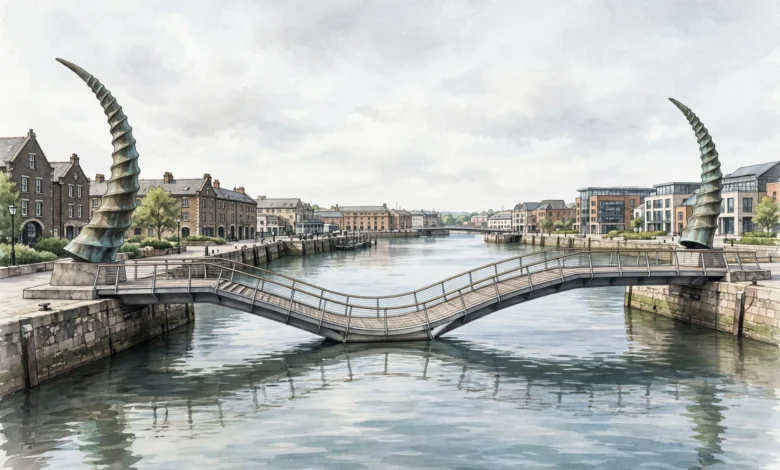
Pero’s Bridge in Bristol collapsed further into the harbour on Halloween night, Saturday 31 October 2026, when its damaged centre span slipped shortly before 11 p.m. and left a small section submerged in St Augustine’s Reach. No one was injured. The fall came days before the bridge was due to be lifted out for refurbishment, and it has forced engineers to review a removal plan that was already set for the week starting Monday 2 November.
The crossing had already been shut to pedestrians and boats since August, after a test lift went wrong and left the central span jammed out of alignment. That closure matters because Pero’s Bridge was not a minor shortcut: it linked Queen Square with Millennium Square across Bristol Harbour, and its horn-shaped counterweights made it one of the city’s most recognisable landmarks. Its second collapse, in front of Saturday-night crowds at the harbourside, turned a long-running repair job into a breaking news story on Sunday 1 November.
What slipped on Halloween night in St Augustine’s Reach
Bristol City Council’s harbour committee chair, Andrew Brown, said the centre span slipped from its previous position, damaging the hydraulic ram, with a small section now submerged in the harbour. He said no one was injured, a small amount of hydraulic oil leaked into the water by the Arnolfini, and workers were on site with environmental specialists to clear it. Engineers were also on site assessing the structure.
The BBC reported on 1 November that a section of the bridge was twisted downward and partly submerged, with one of its horn sculptures in the water. The council said it was reviewing its plans to lift the bridge the following week, and that there was no confirmed impact on the maintenance and refurbishment programme at that stage — a position it said remained under review pending engineering assessment and approval of revised plans.
| Item | Detail |
|---|---|
| Structure | Pero’s Bridge, pedestrian bascule bridge over St Augustine’s Reach, Bristol Harbour |
| Latest incident | Centre span slipped shortly before 11 p.m. GMT, Saturday 31 October 2026 |
| Damage reported | Hydraulic ram damaged; small section submerged; section twisted downward and partly submerged; one horn sculpture in the water |
| Injuries | None reported |
| Pollution reported | Small amount of hydraulic oil leaked by the Arnolfini; clearance work under way with environmental specialists |
| Closed since | August 2026, after a 13 August test lift left the central span jammed in a partially raised position |
| Planned removal | Week starting Monday 2 November 2026; plans now under review after the latest slip |
| Links | Queen Square to Millennium Square |
| Opened | 1999 |
| Design | Irish artist Eilis O’Connell, with Ove Arup & Partners engineers; three spans, central lifting span 11 metres, navigation channel 9 metres |
| Named for | Pero Jones, an enslaved African who lived in Bristol in the 18th century |
| Reopening aim before latest slip | Reinstatement aimed for spring 2027, subject to the repair programme — now under review |
How an August test lift left the bridge stranded
The bridge’s troubles did not start on Halloween. During a routine test of its opening mechanism on the morning of 13 August 2026, the central section dropped suddenly and became misaligned with the rest of the bridge. It stayed jammed in a partially raised position, and the crossing closed to pedestrians and to boats, which could no longer pass beneath it.
The closure also closed the Cascade Steps ferry landing at the end of St Augustine’s Reach, forcing Bristol Ferry Boats to move its city-centre stop to the Prince Street landing stage next to the Arnolfini. Reports put daily use before the closure at an estimated 15,000 people, a figure that shows why the loss of a single footbridge rippled across harbourside businesses, ferry routes and evening footfall.
Why the horns, the locks and the name still matter
Pero’s Bridge was designed as a working sculpture as much as a crossing. Bristol Museums records that the bridge was built in 1999 from a collaboration between artist Eilis O’Connell and consulting engineers Arup, with its distinctive horns acting as counterweights that let the centre section lift for river traffic. The horns also gave the bridge its local nicknames, the Horned Bridge and Shrek’s Bridge.
The bridge was named after Pero Jones, an enslaved African owned by a Bristol merchant in the 1700s, in memory of those affected by the transatlantic slave trade. That naming gives the repair a weight beyond engineering: the structure is a memorial as well as a route, and its long closure has kept a piece of that public history out of use.
The locks added a different problem. Couples had fixed padlocks to the railings for years, and by June 2025 the locks weighed an estimated three tonnes, with the council reporting a “no lift” notice on the bridge because of the weight. The locks were cleared before the July 2025 Harbour Festival, but the episode showed how a popular custom had quietly become an engineering burden on a lifting bridge.
What happens next for the harbour crossing
The immediate question is whether the removal planned for the week starting 2 November can proceed as drawn up, or whether the latest slip forces a revised method. The council has said only that engineers are assessing the structure and that the plans are under review, so no revised date or method is asserted here. Until the spans are removed, boats still cannot pass through St Augustine’s Reach and ferry passengers still cannot use the Cascade Steps landing.
The wider question is cost and confidence. A bridge that failed during a test lift, then slipped again while awaiting removal, will need a repair programme that convinces harbour users it can lift safely again. The Spain train crash at the end of October showed how quickly a transport incident can shut a route and leave travellers waiting for an official reopening plan, and Bristol’s harbour now faces a smaller version of the same test: a clear engineering verdict, a safe removal, and a credible date for the crossing to return.
Frequently asked questions about Pero’s Bridge in Bristol
Did anyone get hurt when Pero’s Bridge collapsed? No. Bristol City Council said no one was injured in the 31 October slip, and no injuries were reported in the August test-lift incident either.
Was the bridge open when it collapsed? No. It had been closed to pedestrians and boats since August 2026, after the 13 August test lift jammed the central span in a partially raised position.
What exactly fell into the water? The centre span slipped and damaged the hydraulic ram, leaving a small section submerged. Reports on 1 November described a twisted, partly submerged section with one horn sculpture in the water.
When was Pero’s Bridge due to be removed? Removal of the spans for refurbishment was planned for the week starting Monday 2 November 2026. The council said after the latest slip that those plans were under review, so that timetable is no longer confirmed.
When will Pero’s Bridge reopen? Before the latest slip, the council aimed to reinstate the bridge by spring 2027. That aim is now subject to the engineering assessment and any revised removal and repair plans, so no new reopening date is given here.
Myth-busting: The bridge did not collapse under pedestrians, and it was not a road bridge carrying traffic. It was an already-closed pedestrian bascule bridge, damaged in August and awaiting removal, whose centre span slipped again on Halloween night — a serious harbour incident, but not a collapse of an open crossing.