Butterball Turkey Recall 2026: No Recall Despite Salmonella in 43% of Samples

Searches for a Butterball turkey recall surged to the top of Google Trends in the United States on Thanksgiving Day, Thursday 26 November 2026, as millions of Americans prepared their holiday meals — but there is no Butterball turkey recall. Federal records show no active recall for whole Butterball turkeys, and the investigation driving the searches found no contamination in whole birds at all.
What the searches are really reacting to is a Guardian and SourceMaterial investigation published on Tuesday 25 November 2026, which found salmonella in just under 43 per cent of ground and chopped turkey samples taken at four Butterball plants over the past year. The findings land on the busiest turkey-cooking day of the year, and they have been widely misread online as a recall of the whole birds on Thanksgiving tables.
Butterball Turkey Recall 2026 — Quick Reference Summary
| Item | Detail |
|---|---|
| Trending search | “butterball turkey recall 2026” — No. 1 on Google Trends US, 26 November 2026 |
| Recall status | No recall issued for whole Butterball turkeys; no active USDA FSIS or FDA recall for whole Thanksgiving turkeys from major brands as of 25 November 2026 |
| What was found | Salmonella in just under 43% of ground and chopped turkey samples at four Butterball plants over the past year |
| Worst plant | Mount Olive, North Carolina — 36% of ground and chopped samples positive, against a USDA limit of 13.5% |
| What tested clean | Whole birds and ready-to-eat (cooked) products — no contamination found |
| Source of data | USDA FSIS inspection data, fiscal years 2025 and 2026, analysed by SourceMaterial; data provided by Slingshot Investigates (Project Slingshot) |
| Antibiotic resistance | Two-thirds of intestinal samples with salmonella or campylobacter in fiscal year 2026 showed resistance to at least one antibiotic |
| Safe cooking temperature | 165°F internal temperature, checked with a food thermometer (CDC guidance) |
What the Investigation Actually Found
The Guardian investigation, published with investigative outlet SourceMaterial, analysed routine USDA Food Safety and Inspection Service sampling data for fiscal years 2025 and 2026. The data, provided by Slingshot Investigates, the investigative arm of animal-rights group Project Slingshot, covered four Butterball slaughterhouses.
Across those plants, just under 43 per cent of ground and chopped turkey samples tested over the past year contained salmonella — well above the industry average. At Mount Olive in North Carolina, the nation’s biggest turkey slaughterhouse, inspectors found salmonella in 36 per cent of ground and chopped turkey samples, nearly three times the 13.5 per cent limit the USDA sets for individual plants.
The same data carried a second warning. Two-thirds of samples taken from birds’ intestines across all of Butterball’s slaughterhouses in fiscal year 2026 that contained salmonella or campylobacter — another pathogen that can sicken humans — showed strains resistant to at least one antibiotic.
Why There Is No Recall — and What the 13.5% Limit Really Means
The confusion is understandable, because the numbers look like they should trigger a recall. Under current federal rules for raw poultry, they do not. Salmonella in raw poultry is treated differently from contamination in ready-to-eat food: a plant that crosses the USDA’s 13.5 per cent performance standard for ground turkey faces no fine and is not forced to pull product from shelves.
Instead, the USDA requires the plant to explain in writing how it is addressing the problem. That is the full extent of the enforcement triggered by the data in this case, and it is why no recall has been announced despite the scale of the findings. Butterball has said food safety is critically important to the company and that it continues to invest in reducing pathogens, and it is part of a USDA pilot programme examining the causes of foodborne illness in poultry plants.
The gap between the public expectation — a failed test means the product is pulled — and the actual rule is the reason this story spread so fast. A positive salmonella result in raw ground turkey is not, on its own, a recall trigger under the federal framework.
The Whole Bird on Your Table Tested Clean
For the millions of households cooking a whole turkey today, the most important line in the investigation is the one getting the least attention: inspectors found no contamination in Butterball’s whole birds or in its ready-to-eat cooked products. The problem the data identifies is confined to raw ground and chopped turkey — the kind that must be cooked thoroughly before eating.
That distinction is also why federal records show no active recall for whole fresh or frozen Thanksgiving turkeys from any major national brand this season, including Butterball, Jennie-O, Honeysuckle White, Perdue and Shady Brook Farms. The whole bird on the Thanksgiving table, the data says, is not the problem.
None of that makes the ground-turkey findings trivial. Ground turkey is a staple in many American kitchens year-round, and the 43 per cent figure sits far above the industry average. But on Thanksgiving Day itself, the practical risk for most cooks is the ordinary one: handling raw poultry safely and cooking it through.
The Viral Clips and Old Recalls Behind the Confusion
Much of the search surge is being fed by recycled material. A viral video circulating this week is not new — it dates to a 2006 investigation in Arkansas — and older web pages referencing more than 78,000 pounds of Butterball ground turkey trace back to a July 2018 salmonella recall, not to any 2026 action.
A November 6, 2026 USDA public health alert has also been mistaken for a Butterball recall. It involves Betterballen Foods LLC, a specialty importer of Dutch-style frozen meat croquettes known as bitterballen — a completely separate company with a similar-sounding name. The Hotel Chocolat recall of Christmas boxes over a salmonella risk in pistachios shows how quickly a genuine seasonal recall can spread; in Butterball’s case, no equivalent recall exists.
How to Cook Turkey Safely This Thanksgiving
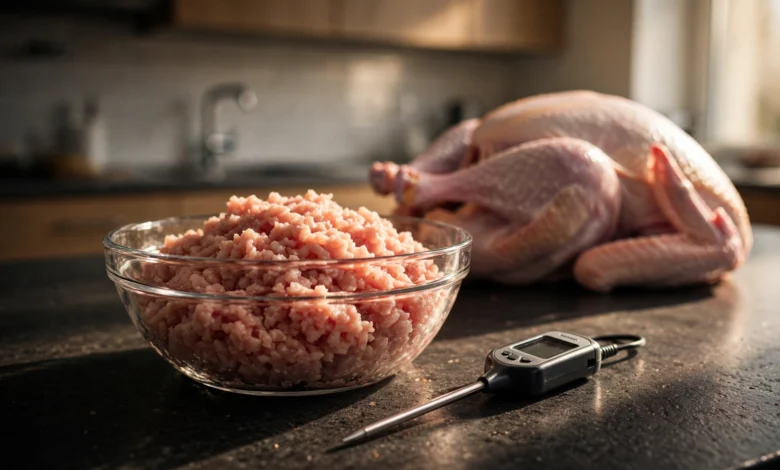
With Thanksgiving dinner costs up this year, few households want to throw a bird away on a misunderstanding — and the official guidance says there is no need to. The CDC’s advice for handling raw turkey is straightforward: cook turkey to a safe internal temperature of 165°F, checked with a food thermometer; do not wash raw turkey, which spreads bacteria around the kitchen; use separate cutting boards for raw meat and ready-to-eat food; and refrigerate leftovers within two hours.
Ground turkey deserves extra care. Because grinding spreads any bacteria through the meat, it should always be cooked to 165°F throughout, with no pink remaining, and hands, utensils and surfaces that touched it raw should be washed before they touch anything else.
What Happens Next for Butterball
Butterball, America’s biggest turkey company, must now explain to the USDA how it plans to bring its plants back within the 13.5 per cent standard — and that written response will determine whether the story ends with a company explanation or turns into a broader enforcement fight. The company has argued that the agency should measure how much salmonella is in a sample rather than simply whether it is present, a position that puts it at odds with campaigners who want tougher action.
For now, the search spike itself is the story of the day: a real and serious set of inspection findings, published the day before Thanksgiving, has been widely misread as a recall that does not exist. The whole birds are clear, the ground turkey numbers are real, and the difference between the two is exactly what shoppers searching today need to know.
Butterball Turkey Recall 2026 — Frequently Asked Questions
Is there a Butterball turkey recall in 2026?
No. There is no active USDA or FDA recall for whole Butterball turkeys in 2026, and no recall was announced after the Guardian and SourceMaterial investigation published on 25 November 2026.
What did the salmonella report actually find?
Salmonella in just under 43 per cent of ground and chopped turkey samples from four Butterball plants over the past year, including 36 per cent at the Mount Olive plant in North Carolina — well above the USDA’s 13.5 per cent limit for individual plants.
Is my whole Thanksgiving turkey safe?
Inspectors found no contamination in Butterball’s whole birds or ready-to-eat products, and federal records list no active recall for whole Thanksgiving turkeys from major brands. Cook it to 165°F and follow standard food-safety handling.
Why is there no recall if the limit was exceeded?
Under federal rules for raw poultry, exceeding the USDA performance standard does not trigger a fine or a recall. The plant is required to explain in writing how it will fix the problem.
What about the viral video and the 2018 recall?
The viral video dates to a 2006 investigation, and the 78,000-pound recall being shared online is from July 2018. A November 2026 alert for Betterballen Foods is a different company entirely.