UK Be Ready Panic Buying: What the 72-Hour Checklist Really Asks Households to Do

London, Friday 30 October 2026 — Reports on Friday described shoppers stocking up on toilet paper, tinned food and emergency kit after the UK government’s Be Ready advice, even as ministers insist the guidance is about gradual preparation, not a warning of an imminent crisis. The Cabinet Office launched the Be Ready campaign on Thursday 22 October 2026, asking households to be able to manage on their own for three days if power, water, phone networks or the internet are disrupted. The latest reports, citing The Independent, say the advice has driven a sharp rise in sales of everyday essentials and low-volume emergency electronics, a response the government says it did not ask shoppers to make in a single rush.
UK Be Ready — Quick Reference Summary
| Campaign | Be Ready, Cabinet Office, launched 22 October 2026 |
| Planning period | 72 hours (three days) without normal services |
| Campaign length | First stage of a three-year campaign |
| Drinking water | 3 litres per person per day; 9 litres per person over three days |
| Food | Three days of non-perishable food needing no fridge or cooking |
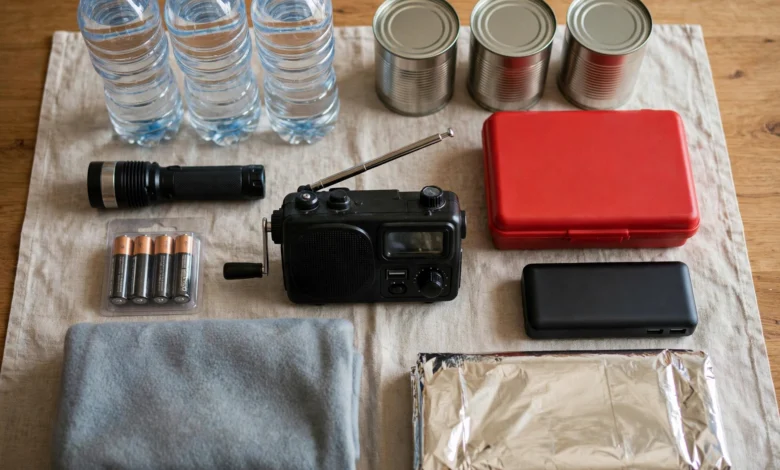
| Light, warmth, information | Torch and spare batteries, blankets, warm clothes, battery or wind-up FM radio, charged power bank |
| Money and documents | Some cash in notes and coins; printed documents and emergency contacts |
| Health | Several days of prescription medicines, first-aid supplies, hygiene products |
| Official approach | Build the kit gradually during normal shopping; start with what is already at home |
| What it is not | Not a warning of an imminent crisis, and not an instruction to panic-buy |
How a three-day planning figure turned into a shopping rush
The Be Ready checklist is short and practical, and that simplicity may be part of why it travelled so fast. It asks for water at 3 litres per person per day for drinking, with more needed for cooking and washing, so a household of four needs 36 litres of drinking water alone over three days before cooking and washing are counted. Food should be the kind a household already eats, provided it needs neither a fridge nor a hob: tinned fish, meat or vegetables, dried fruit and nuts, plus a tin opener.
Retailers reported the effect within days, and the figures quoted in press reports are retailer-reported, not an official national sales series. Bamboo toilet-paper maker Cheeky Panda reported sales up 43 per cent compared with the same period in 2025, while Serious Tissues reported a 36 per cent rise over five days, according to reports citing The Telegraph and The Independent. Discount retailer B&M was reported to have seen toilet-paper sales rise 19 per cent since the guidance was issued, alongside rises for power banks and torches.
Electronics showed the sharpest percentage moves, partly because wind-up radios and torches are normally low-volume lines. Maplin was reported to have seen radio sales rise 92 per cent, torch sales rise 284 per cent and power-bank sales rise 106 per cent against the same time last month. At least seven radio models were reported sold out at four outlets on Saturday 24 October, and several chains were named in press reports as seeing emergency stock move quickly. Those sell-outs do not, on their own, prove a nationwide shortage of food or water.
What ministers have actually said since the launch
Defence Secretary Wes Streeting told BBC Newsnight that the public response was encouraging, saying: “It’s encouraging that people are taking practical steps to be ready.” He added that having a few everyday essentials at home, from tinned food to torches, helps households prepare for disruption whether that means flooding, power cuts or burst pipes. Prime Minister Andy Burnham struck a similar tone on 23 October, saying the advice was not about panic buying and that people should simply have enough at home to tide them over.
Security Minister Dan Jarvis said that if people who can prepare do so, emergency services can focus on people who need more support, according to the government’s launch material. The government frames the campaign as a precaution against everyday emergencies such as storms, floods and wildfires, not as a signal that a specific attack or nationwide blackout is imminent. That distinction matters, because some online claims have stretched a general preparedness message into a countdown that the official guidance does not contain.
Why the UK chose 72 hours, and how neighbours differ
The three-day standard brings the UK into line with France, Ireland and the Netherlands, according to the government’s launch material. Germany goes further, with its Federal Office of Civil Protection and Disaster Assistance recommending that households be able to supply themselves for ten days if possible, while saying even three days helps a great deal. At EU level, the European Commission’s Preparedness Union Strategy of March 2025 encouraged people to keep enough essential supplies to manage for at least 72 hours in a crisis.
The campaign also points households to free steps that cost nothing. Signing up to the Priority Services Register helps energy and water companies identify people who need extra help during an outage, and agreeing with neighbours how to support each other is part of the official advice. The checklist itself advises checking cupboards first, adding an item or two during normal shopping trips, and checking expiry dates every six months. For households with babies or pets, the guidance adds nappies and ready-made formula where relevant, and pet food.
The household cost question behind the checklist
A 72-hour kit can be built cheaply if it starts from food a household already buys, but the cost rises quickly when shoppers buy everything at once. The official advice is explicit on this point: build gradually, rather than clearing a shelf in one trip, because a sudden rush can leave other shoppers without basics and push prices for niche items such as wind-up radios higher. Retailers and suppliers have also urged restraint, with toilet-paper makers telling customers there is no need to stock months’ worth at once.
The wider context is a cost-of-living squeeze that has already shaped the week’s UK news, including the Autumn Budget presented on Wednesday 28 October 2026. A household that adds one tin or one pack of batteries to a normal shop each week reaches the three-day figure without a single large bill. A household that tries to buy the whole kit in a day, by contrast, pays more, risks buying items it will not eat, and contributes to the very shortages the campaign is designed to avoid.
What to check before you buy anything else
Start with a cupboard audit, because most households already hold part of the kit without realising it. Count tinned food, dried goods, bottled water, batteries, blankets and any charged power bank, then list only the gaps. Write down radio frequencies, emergency contacts and regular medicines and dosages on paper, since a phone with a dead battery cannot retrieve them. The UK’s wider resilience planning is also reflected in UK defence spending to reach 3% of GDP by 2030.
Check expiry dates every six months, as the official checklist advises, and rotate food into normal meals so nothing is wasted. Keep cash in a mix of notes and coins in case card payments or cash machines fail, and keep printed copies of important documents where they can be found in the dark. If a household member relies on medical equipment, keep printed instructions and charged backup batteries with the kit. The aim is a kit that is usable on a bad night, not a display of supplies bought in a hurry.
Frequently asked questions
Q: Is the UK government telling people to panic-buy? A: No. The Be Ready guidance asks households to build a three-day kit gradually during normal shopping, starting with what is already at home. Ministers have said repeatedly that the campaign is not about panic buying.
Q: How much water does the checklist actually ask for? A: Three litres of drinking water per person per day, which is nine litres per person over three days. Cooking and washing need extra, so the drinking figure alone is not the whole water need.
Q: Does Be Ready mean an emergency is expected within three days? A: No. The 72-hour figure is a planning period for coping if services are disrupted, not a prediction that an emergency will happen within three days. The government frames it as preparation for storms, floods, wildfires, cyber disruption and other plausible interruptions.
Q: What sells out first, and why? A: Press reports point to low-volume electronics first — wind-up radios, torches and power banks — rather than a broad run on all food. Percentage rises look dramatic partly because those lines normally sell in small numbers.
Q: What is the cheapest way to build the kit? A: Start with the cupboard, add one or two items per normal shop, choose food the household already eats, and use free steps such as the Priority Services Register. Check expiry dates every six months and rotate stock into normal meals.