Ireland vs South Africa: Baloucoune Brace Seals 20-17 Nations Championship Win in Dublin

Ireland beat South Africa 20-17 at Aviva Stadium in Dublin on Saturday 21 November 2026, as winger Robert Baloucoune scored two first-half tries in the Nations Championship. The Round 6 result gave Andy Farrell’s side a statement win over the world champions, while a losing bonus point still sent South Africa into next weekend’s final at Twickenham.
Reuters reported the 20-17 result as a rejuvenated Ireland performance built on first-half control. South Africa, beaten 21-19 by France in Paris last weekend, have now lost consecutive Tests for the first time in four years, according to Sky Sports and the Associated Press.
Ireland vs South Africa: Match Facts at a Glance
| Detail | Verified information |
|---|---|
| Match | Ireland vs South Africa, Nations Championship Round 6 |
| Date | Saturday 21 November 2026 |
| Venue | Aviva Stadium, Dublin |
| Final score | Ireland 20-17 South Africa |
| Half-time score | Ireland 17-10 South Africa |
| Ireland tries | Robert Baloucoune (2), Ronan Kelleher |
| Ireland kicks | Sam Prendergast — 1 conversion, 1 penalty |
| South Africa tries | Morne van den Berg, Malcolm Marx |
| South Africa kicks | Sacha Feinberg-Mngomezulu — 2 conversions, 1 penalty |
| Coaches | Andy Farrell (Ireland); Rassie Erasmus (South Africa, banned from matchday involvement) |
| Ireland captain | Dan Sheehan, starting at No. 8 |
| Next step | Nations Championship finals weekend, Twickenham, 27-29 November 2026 |
| Attendance | Not publicly verified |
Baloucoune’s Two Corner Finishes Set the Tone in Dublin
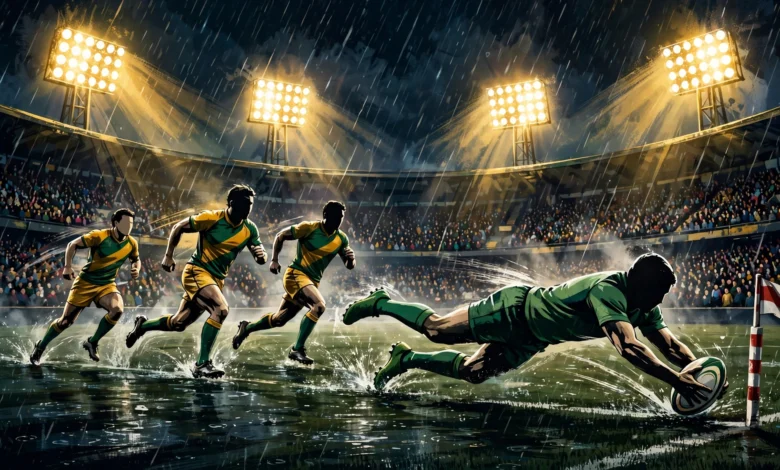
South Africa scored first through an early Sacha Feinberg-Mngomezulu penalty, and the Springboks led for only four minutes in the match, according to the Associated Press. Ireland answered at pace, with Stuart McCloskey’s pass putting Baloucoune into the right corner for the opening try in the eighth minute, as timed by Planet Rugby.
Baloucoune was denied a second score when Cameron Hanekom dislodged the ball as he grounded it, but the reprieve lasted only minutes. Mack Hansen regathered a deflected ball and sent Baloucoune into the same corner again in the 19th minute, stretching Ireland to 10-3.
Sky Sports described the Dublin victory as a huge result sealed by Baloucoune’s brace. The winger’s aerial work also mattered, because Ireland repeatedly won the contestable kicks that South Africa needed to build pressure.
A Scrum Battle Ireland Survived Rather Than Won
South Africa’s route back came from their strongest weapon. After Hugo Keenan carried the ball back over his own line, a five-metre scrum sequence ended with scrumhalf Morne van den Berg scoring in the 35th minute, and Feinberg-Mngomezulu’s conversion levelled the match at 10-10.
Ireland struck again before the break through a lineout move finished by hooker Ronan Kelleher, who stepped past Canan Moodie to score. Sam Prendergast converted from the sideline, and Ireland reached half-time ahead 17-10.
Planet Rugby counted four scrum penalties and two free-kicks for South Africa against one scrum penalty and two free-kicks for Ireland. The lesson of the night was clear in that count: Ireland did not need to dominate the scrum to win, because their defence, line speed and backline accuracy carried the result.
Prendergast’s Penalty, Marx’s Reply and a 14-a-Side Finish
Moodie thought he had scored early in the second half, but video review showed his foot in touch as Hansen tackled him into the corner. Prendergast then kicked a 54th-minute penalty that pushed Ireland 20-10 clear and briefly took away South Africa’s losing bonus point.
Malcolm Marx replied four minutes later with a close-range converted try, his 33rd Test try according to the Associated Press, cutting the gap to three points. Ireland then held up Dan Sheehan over the line at the other end — Feinberg-Mngomezulu making the stop — in a passage that showed how fine the margins had become.
Sheehan and Marco van Staden were sin-binned together in the 73rd minute for clear-outs at the same breakdown, leaving both sides with 14 men. South Africa built 16 phases late on, but the move broke down in front of the Irish posts when van den Berg ran into a teammate, and Ireland closed out the win.
Erasmus Watched From a Hotel as the Ban Shaped the Week
Springboks head coach Rassie Erasmus served the first match of a six-match ban after criticising the match officials following the France defeat. Reuters reported that Erasmus watched from his hotel, while the Associated Press reported that more than 70,000 people joined his online watchalong.
The ban became the story of the week in Dublin before a ball was kicked. Ireland captain Dan Sheehan, starting at No. 8 because of injuries to Caelan Doris, Jack Conan and others, said his side were proud to negate the Springbok scrum even while South Africa stayed on top at times in that area.
Farrell called the performance remarkable and said it showed where Ireland stand 10 months out from the Rugby World Cup in Australia. Former Ireland captain Brian O’Driscoll told ITV that Ireland were the better attacking team and that the scoreline might even have flattered South Africa.
What the Result Means for the Twickenham Finals Weekend
The losing bonus point tied South Africa with New Zealand at the top of the southern hemisphere standings, with points difference separating them. Sky Sports and the Associated Press both report that South Africa will face France in the inaugural Nations Championship final at Twickenham, although reports differ on whether the final falls on the Saturday or the Sunday of the 27-29 November finals weekend, so the exact day is not stated here as confirmed.
Reuters reported that Ireland cannot catch England in the northern hemisphere standings but are guaranteed a top-three finish and a marquee game at the finals weekend. The Associated Press reported that Ireland will play Australia at Twickenham on the Friday after both teams finished third in their pools, while earlier reports had listed other possible opponents.
The wider tournament picture also includes England’s win over the All Blacks on the same Saturday. Readers following the full Round 6 story can read how England beat New Zealand 37-12 at Twickenham, a result that confirmed England’s place at the top of the northern standings.
For South Africa, the Dublin defeat is a fourth loss in eight matches, according to Planet Rugby, and it arrives less than a year before the Rugby World Cup in Australia. For Ireland, the win ended a run of six straight defeats against South Africa, New Zealand or France, according to the Associated Press, and it gives Farrell a clear marker before next year’s tournament.
Questions Readers Ask About Ireland vs South Africa
What was the final score in Ireland vs South Africa?
Ireland won 20-17 at Aviva Stadium in Dublin on Saturday 21 November 2026. Ireland led 17-10 at half-time in the Nations Championship Round 6 match.
Who scored the tries for Ireland?
Robert Baloucoune scored two tries in the first quarter, and Ronan Kelleher scored just before half-time. Sam Prendergast added one conversion and one penalty.
Who scored for South Africa?
Morne van den Berg and Malcolm Marx scored South Africa’s tries. Sacha Feinberg-Mngomezulu kicked two conversions and one penalty.
Why was Rassie Erasmus not at the stadium?
Erasmus was serving the first match of a six-match ban for criticising match officials after the France game. He watched from his Dublin hotel and hosted an online watchalong for supporters.
Did South Africa still reach the Nations Championship final?
Yes. The losing bonus point for finishing within seven points tied South Africa with New Zealand at the top of the southern standings, and points difference sent the Springboks into the final against France at Twickenham.
Myth check: did Ireland only win because South Africa were weakened by the ban?
No. The ban removed the head coach from matchday involvement, but South Africa fielded their world champion side, dominated the scrum count and still lost the aerial battle and the attacking contest. O’Driscoll’s assessment was that Ireland were outstanding and the better attacking team on the night, which is a rugby explanation rather than a ban explanation.