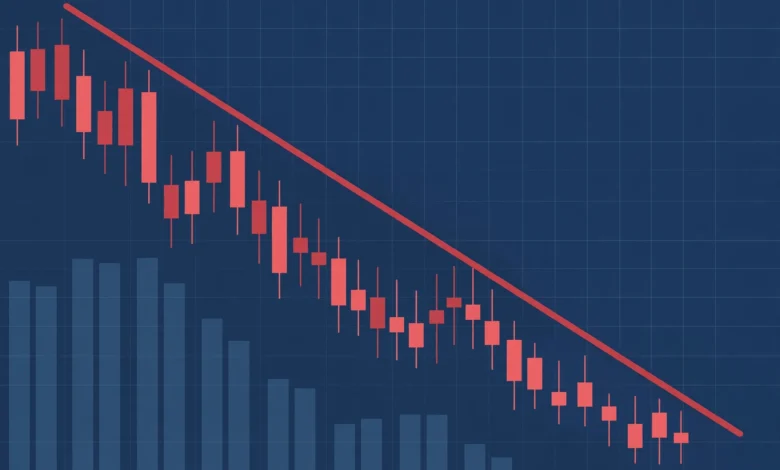
London’s FTSE 100 fell more than 2% on Friday 6 November 2026 as a brutal sell-off in artificial intelligence shares on Wall Street spread across the globe, wiping trillions of pounds off the value of world markets. The blue-chip index dropped to 10,540.78 by 11:43 GMT, putting it on course for its steepest fall in over seven months, after the Nasdaq suffered its worst session in 19 months.
The rout began in New York on Thursday, gathered force across Asia overnight, and reached London at the open. Investors are suddenly questioning the huge spending on AI infrastructure, after the Democrats’ capture of both chambers of Congress in this week’s US midterm elections raised the prospect of tougher regulation of the sector.
FTSE 100 Falls — Market Snapshot, Friday 6 November 2026
| Market | Move on the day | Level | What it means |
|---|---|---|---|
| FTSE 100 (London) | -2.2% by 11:43 GMT | 10,540.78 | Worst session since mid-March; figures are intraday, market closes 16:30 GMT |
| FTSE 250 (London) | -1.2% intraday | Not publicly verified | Domestically focused shares also hit |
| Nasdaq Composite (US, Thu 5 Nov) | -5.5% | 24,315 | Worst day in 19 months; 11.9% below 6 October record |
| S&P 500 (US, Thu 5 Nov) | -4.4% | 7,353.73 | Broad selling beyond technology |
| Dow Jones (US, Thu 5 Nov) | -3.4% | 51,523.06 | Fell 1,833 points in a single session |
| Nikkei 225 (Tokyo) | -6.0% | 57,434.77 | Below 60,000 for the first time in nearly half a year |
| Kospi (Seoul) | -8.55% early | 4,985.99 later | Circuit breaker triggered by the plunge |
| Bank Rate (Bank of England) | Raised to 4% | From 3.75% | First rise since August 2023, decided Thu 5 Nov |
London Opens Sharply Lower as Wall Street’s Losses Cross the Atlantic
The FTSE 100 opened down 1.5% at 10,618.33 on Friday morning, and the selling only gathered pace from there. By midday the index stood at 10,542.10, down 2.3%, according to Alliance News, with US-exposed firms, technology businesses and pharmaceutical companies among the hardest hit.
BT Group shed about 5%, while Airtel Africa, Relx, WPP, Experian and AstraZeneca lost between 4.1% and 4.7%. Energy stocks fell 2.5% as oil prices slipped. The more domestically focused FTSE 250 was around 1.2% lower, a sign that the anxiety reached well beyond the big multinationals.
Europe fared little better. The pan-European STOXX 600 was down 1%, while France’s CAC 40 and Germany’s DAX opened 1.2% and 1.5% lower respectively. The scale of the move recalled the market shock of April 2025, when President Donald Trump’s “Liberation Day” tariffs last sent Wall Street into a tailspin — Thursday was Wall Street’s worst day since then.
Why AI Shares Are Suddenly Under Pressure
The trigger, according to Reuters’ reporting on Friday’s sell-off, was the change in the US political landscape. The Democrats’ capture of the US House and Senate earlier this week sparked concerns of AI regulation, a slowdown in data-centre construction and hyperscalers tightening their purse strings.
Chipmakers bore the brunt. Nvidia slid by more than 9% on Thursday as investors questioned whether the vast sums being poured into AI infrastructure will ever pay off. The Nasdaq-100, the index of the biggest US technology names, sank 6.36% to 26,629.81, and the Nasdaq Composite closed 11.9% below the record it set on 6 October.
Analysts linked the weakness to a growing fear that the AI boom has become a bubble, built on high levels of debt and spending. Thursday’s rout wiped out the post-election rally in a single session, and the selling spread on Friday to every market that had ridden the AI wave.
Asia Feels the Full Force of the Sell-Off
Tokyo took the brunt of Friday’s trading. The Nikkei 225 slipped 6.0% to finish at 57,434.77, falling below the 60,000-point level for the first time in nearly half a year, the Associated Press reported. South Korea fared worse still: the Kospi dropped 8.55% in early trading, triggering a circuit breaker, and later traded 7.4% lower at 4,985.99.
China’s Shanghai Composite closed down 1.1%, Hong Kong’s Hang Seng fell 1.3% and Sydney’s S&P/ASX 200 ended 0.5% lower. The Associated Press described global shares tumbling as the prospect of more regulation compounded fears about debt and spending in the AI sector.
One notable exception was India, where the Sensex rose 700 points and the Nifty neared 24,700, defying the weak global mood. For most of Asia, though, Friday was a day of heavy losses with no obvious place to hide.
A Rate Rise Lands at the Worst Possible Moment
London’s pain was compounded by the Bank of England’s decision on Thursday to raise Bank Rate by a quarter of a percentage point to 4%, its first increase since August 2023. The Monetary Policy Committee voted 8–1 for the rise, with Catherine Mann dissenting in favour of a larger half-point increase to 4.25%.
The Bank acted because soaring energy costs are pushing up inflation, which it now expects to approach 5% by the middle of 2027 and not return to its 2% target until 2028. Governor Andrew Bailey said the increase should not be seen as the start of an “inevitable long sequence of hikes”, but added that another rise could follow if energy prices stay elevated.
Higher borrowing costs are already biting. UK house prices fell in October, recording their steepest annual decline in three years, according to figures from Lloyds Bank, as elevated rates and renewed inflationary pressures weighed on demand. The Bank’s next decision is due on 17 December.
What the Rout Means for Savers, Borrowers and Pensions
For most people, a falling FTSE 100 shows up first in pension funds and ISAs, which hold large stakes in the index’s biggest companies. A single bad day rarely changes a long-term outcome, and major indices remain higher than at the start of 2026 despite Friday’s losses, but a sustained slide would eat into retirement savings.
Borrowers face a more immediate squeeze. The Bank of England’s rate rise means tracker mortgage payments go up at once, while lenders are expected to pass the increase on to variable-rate borrowers within a month. Anyone remortgaging in the coming weeks will find the market markedly less forgiving than it was a month ago.
The contrast with the last big market shock is worth noting. When shares fell in April 2025, the trigger was tariffs; this time it is doubt about the technology that was supposed to power the next decade of growth. The FTSE 100’s reaction to the Budget last month was comparatively mild, which underlines how abruptly sentiment has turned. Investors will now watch the US October jobs report and the Bank of England’s December meeting for the next signal — and the European Central Bank faces its own questions about how to respond to a global slowdown.
Frequently Asked Questions
How far did the FTSE 100 fall on Friday 6 November 2026?
The FTSE 100 was down 2.2% at 10,540.78 by 11:43 GMT, according to Reuters, and 2.3% at 10,542.10 by midday, according to Alliance News. The final closing level was not yet known at publication time because the London market closes at 16:30 GMT.
What caused the global stock market sell-off?
The sell-off began with a sharp fall in AI and chip shares on Wall Street on Thursday 5 November. The Democrats’ capture of both chambers of Congress in the US midterm elections raised fears of AI regulation, a slowdown in data-centre construction and tighter spending by the big technology companies, and the losses then spread across Asia and Europe.
How badly did US markets fall on Thursday?
The Nasdaq Composite fell 5.5%, its worst session in 19 months. The S&P 500 dropped 4.4% to 7,353.73 and the Dow Jones fell 1,833 points, or 3.4%, to 51,523.06. It was Wall Street’s worst day since the April 2025 tariff shock.
Why did the Bank of England raise interest rates this week?
The Bank raised Bank Rate from 3.75% to 4% on Thursday 5 November, its first increase since August 2023, because soaring energy costs are pushing inflation higher. The Bank expects inflation to approach 5% by the middle of 2027. Eight of the nine Monetary Policy Committee members backed the quarter-point rise.
Will the FTSE 100 keep falling?
That cannot be known in advance, and no credible source claims to know. Markets will take their next steer from the US October jobs report, due on Friday, and from the Bank of England’s next decision on 17 December. What is certain is that the AI spending boom, which drove markets higher for much of 2026, is now being questioned openly by investors.
Myth-busting: is this a stock market crash?
It is a sharp sell-off, not yet a crash in the usual sense. A crash generally means a fall of 10% or more in a short period; the FTSE 100 fell just over 2% intraday on Friday, and major indices remain higher than at the start of 2026. The Nasdaq, down 11.9% from its 6 October record, is the closest to correction territory — a 10% fall from a peak — and that distinction matters for anyone weighing whether to sell in a panic.