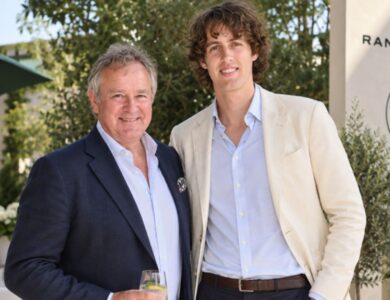
Brent Hoberman: The Lastminute.com Founder Who Turned a Dot-Com Exit Into a Startup Empire
The lastminute.com sale made Brent Hoberman wealthy and famous; what came next arguably mattered even more.

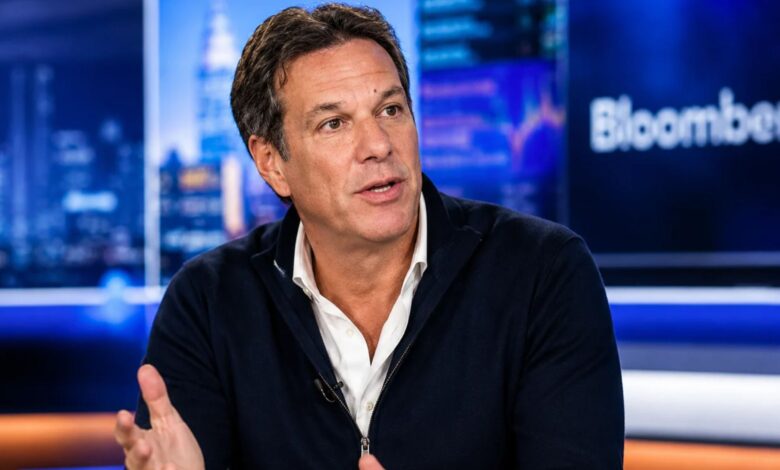
Brent Hoberman first became a household name during Britain’s late-1990s internet boom, when lastminute.com turned a simple idea about unused hotel capacity into one of Europe’s most recognisable online travel businesses. The company went public in 2000 and was acquired by Sabre in 2005 for a headline value of £577 million.
But the lasting significance of Hoberman’s career is not the exit itself. More than two decades after lastminute.com was founded, he remains active as a founder, investor, startup backer and ecosystem builder. Founders Factory currently lists him as its Executive Chairman and Founder, while his wider interests include Founders Forum and firstminute capital.
That makes Brent Hoberman a particularly useful case study in what happened after the first generation of British internet entrepreneurs stopped building one company at a time and began building the institutions around entrepreneurship itself.
BLUF: Brent Hoberman is a British entrepreneur and investor best known for co-founding lastminute.com with Martha Lane Fox in 1998 and serving as its CEO from launch. After the company was sold to Sabre in 2005, he moved into venture building, startup investment and founder networks through Founders Forum, Founders Factory and firstminute capital.
Brent Hoberman at a Glance
| Detail | Verified information |
|---|---|
| Full name | Brent Shawzin Hoberman |
| Born | 25 November 1968 |
| Birthplace | Cape Town, South Africa |
| Known for | Co-founding lastminute.com |
| Lastminute.com founded | 1998 |
| Lastminute.com role | CEO from inception |
| Lastminute.com exit | Sold to Sabre in 2005 |
| Reported sale value | £577 million transaction value; company sources also describe the deal as $1.1 billion |
| Current major role | Executive Chairman and Founder, Founders Factory |
| Other major ventures | Founders Forum, firstminute capital, Made.com and other technology businesses |
| Honour | CBE, 2015 |
| Education | Dragon School, Eton College, New College, Oxford |
| Current base | London |
Founders Factory’s current team page identifies Hoberman as Executive Chairman, Founder. His Founders File biography records his birth in Cape Town on 25 November 1968 and describes his progression from lastminute.com founder to investor and venture builder.
A Hotel Room, a Price Negotiation and the Idea That Became Lastminute.com
Hoberman’s own career history places the origin of lastminute.com in a deceptively ordinary observation.
During the early 1990s, he realised that hotels with empty rooms close to the date of arrival had an economic problem: an unsold room disappeared as inventory once the night had passed. Hoberman experimented with calling hotels directly and negotiating discounts on unused capacity. His Founders File biography says some of the discounts could reach roughly 70%.
He eventually turned that observation into a written business plan, but the idea stayed dormant for several years. By 1998, the internet had matured sufficiently to make a digital version of the model commercially plausible. Hoberman left the founding team of QXL.com and persuaded his former colleague Martha Lane Fox to join him. Lastminute.com was born.
The idea was particularly suited to the internet because the web could match fragmented supply and consumers looking for immediate bargains without requiring the physical infrastructure of a traditional travel agency.
That was the central commercial insight: last-minute inventory was not worthless; it simply required a marketplace capable of finding a buyer quickly.
The 2000 Float That Made Hoberman a Dot-Com Celebrity
Lastminute.com grew at extraordinary speed.
The company launched in 1998 and floated on the London Stock Exchange in March 2000, at the height of the technology boom. Hoberman’s Founders File describes the flotation as a record-setting event, including a reported 43-times oversubscription. The company’s market performance, however, was rapidly caught in the collapse of technology valuations after the dot-com peak.
The distinction between the IPO and the eventual sale is important.
The company’s stock suffered a dramatic decline after listing, with Founders Factory’s biography recording a fall of approximately 95% from its peak. Yet Hoberman stayed as CEO, continued to raise capital and expanded the company through acquisitions and international growth. The business ultimately operated across numerous European markets and acquired 14 companies before its sale.
The episode is revealing because it complicates the conventional dot-com story.
Hoberman was not simply an entrepreneur who benefited from a technology bubble. He remained in charge when the bubble burst and had to run a real operating company after the speculative excitement disappeared.
The 2005 Sabre Deal
In May 2005, Sabre Holdings agreed to acquire lastminute.com for £577 million. The transaction was structured at 165p per share and required shareholder and court approval. The acquisition was completed in July 2005.
Contemporary reporting provides an unusually specific picture of Hoberman’s proceeds. The Guardian reported that he stood to receive just over £26 million for his 15.8 million shares, while Martha Lane Fox’s holding was worth approximately £13.5 million.
That figure is one of the strongest publicly documented anchors for discussions of Hoberman’s wealth from his first major exit.
It should not, however, be confused with his lifetime net worth.
The CEO Exit Was Only the Beginning
Hoberman remained involved with lastminute.com after the Sabre acquisition but stepped aside from the chief executive position in April 2006.
At that point, Ian McCaig became CEO while Hoberman moved into a part-time chairman role focused on strategy, development, marketing and technology.
That transition marks a broader change in his career.
Instead of spending the rest of his professional life operating the same travel company, Hoberman increasingly became involved in building and backing other businesses.
His post-lastminute career has included:
- mydeco.com, an online furniture and interiors business.
- Made.com, which he co-founded in 2010.
- Founders Forum, created in 2005 as a network for entrepreneurs.
- Founders Factory, a venture studio and accelerator.
- firstminute capital, a seed investment firm co-founded with Spencer Crawley.
- Founders Pledge, which encourages entrepreneurs to commit part of their exit proceeds to charitable causes.
- Investments and advisory positions across technology, consumer, AI, robotics and other sectors.
This second phase arguably explains Hoberman’s present-day influence better than the lastminute.com exit does.
Founders Factory Shows How Hoberman’s Role Changed
Founders Factory is perhaps the clearest expression of Hoberman’s post-lastminute strategy.
The company describes itself as a venture builder and investor, with a model combining capital, operational expertise, corporate partnerships and accelerator programmes. Its own history identifies Brent Hoberman, Henry Lane Fox and George Northcott as its founders.
Founders Factory says it has worked with more than 500 companies across five continents. Hoberman’s individual Founders File profile records more than 400 companies supported through the broader venture-building ecosystem, showing how his work shifted from creating one high-profile consumer business to supporting many companies at different stages.
The distinction matters.
A conventional serial entrepreneur repeatedly starts companies. Hoberman’s later career is broader: he has helped create platforms that allow other entrepreneurs to start, finance, hire, scale and exit companies.
That makes him less visible to consumers than he was during the lastminute.com years, but potentially more influential within the startup economy.
Firstminute Capital and the Shift Toward Seed Investment
Hoberman also moved into venture capital.
Firstminute capital was founded in 2017 by Brent Hoberman and Spencer Crawley. Current firstminute materials describe the firm as a London-based European seed investor backed by a large network of founders and CEOs, while Hoberman’s Founders File profile states that the fund has grown to approximately $500 million in assets under management and has invested in more than 200 startups.
That evolution mirrors a wider change in Hoberman’s career philosophy.
At lastminute.com, capital was used to expand one company. Through firstminute capital, capital becomes a tool for identifying several companies at an early stage and helping their founders scale.
The portfolio logic is different, but the underlying instinct is familiar: identify an underused opportunity early, add infrastructure and distribution, then accelerate growth.
Made.com Added Another Chapter to the Story
Hoberman also co-founded Made.com in 2010 with Ning Li.
The company attempted to reinvent the furniture-buying model by connecting consumers with design-led products through an online platform. Made later listed publicly in 2021 at a valuation of around $1 billion according to Hoberman’s current Founders File profile and other contemporary biographies.
Hoberman left before the flotation.
That decision is worth examining because the Made.com story eventually ended very differently from the headline valuation suggested. The company encountered worsening market conditions after its flotation, acquired Trouva in 2022 and subsequently entered liquidation later that year.
For Hoberman, the episode reinforced an important distinction between a high private or public valuation and the durability of a business model.
His career therefore contains both major wins and uncomfortable outcomes. That makes the record more useful than a purely celebratory entrepreneurial biography.
The Network Around Hoberman Became a Business in Its Own Right
Founders Forum was created in 2005, the same year as the lastminute.com exit.
Hoberman’s Founders File says the motivation was straightforward: ambitious entrepreneurs needed a place to collaborate, exchange problems and share opportunities if London was going to maintain its position as an innovation centre.
Over time, the network expanded beyond a traditional founder conference model and became part of a wider ecosystem incorporating programmes, advisory relationships and founder-focused organisations.
The broader group has included businesses and initiatives such as Founders Intelligence, Founders Keepers, Founders Pledge, 01 Founders and other technology-oriented ventures. London Tech Week’s current profile also identifies Hoberman as an active figure within that wider ecosystem.
This is where his career begins to look less like a sequence of individual company exits and more like infrastructure building.
Brent Hoberman’s Public-Policy Role Goes Beyond Business
Hoberman has also operated outside the conventional startup boardroom.
The UK Government has publicly identified him as a member of advisory structures connected with digital government and entrepreneurship. He also chaired the Royal Foundation Taskforce on the Prevention of Cyberbullying associated with the Duke of Cambridge.
His CBE is formally documented by the UK Government.
The 2015 New Year Honours list records Brent Shawzin Hoberman as a Commander of the Order of the British Empire, with the citation: “For services to Entrepreneurship.”
That honour formalised something already apparent from his career: Hoberman’s reputation had moved beyond the value of one company and into the broader question of how entrepreneurs and technology businesses should be supported in Britain.
Education, Early Influences and the Formation of a Founder
Hoberman was born in Cape Town and spent part of his childhood in South Africa before moving internationally and eventually settling into British education.
The Dragon School records that he attended from 1979 to 1982 before going to Eton College and then studying Modern Languages at New College, Oxford.
Oxford’s Modern Languages material has also preserved Hoberman’s own explanation of why studying French and German proved useful in business: he argued that it helped him analyse large quantities of information, synthesise ideas quickly and later manage a multilingual and multicultural operation at lastminute.com.
That detail is more revealing than the generic claim that he “studied at Oxford”.
Lastminute.com expanded across multiple European markets, so language, cultural interpretation and cross-border communication were practical business skills rather than merely academic credentials.
Brent Hoberman’s Career Timeline
| Year | Event |
|---|---|
| 1968 | Born in Cape Town, South Africa |
| 1979–1982 | Attended Dragon School |
| 1980s | Continued education at Eton College |
| Early 1990s | Developed the idea behind last-minute hotel deals |
| 1998 | Co-founded lastminute.com with Martha Lane Fox |
| 2000 | lastminute.com floated on the London Stock Exchange |
| 2005 | Sabre agreed a £577m acquisition of lastminute.com |
| 2005 | Founders Forum was established |
| 2006 | Hoberman stepped down from day-to-day CEO duties at lastminute.com |
| 2007–2008 | Developed mydeco.com |
| 2009 | Became involved in PROfounders Capital |
| 2010 | Co-founded Made.com |
| 2015 | Left PROfounders and received a CBE for services to entrepreneurship |
| 2017 | Co-founded firstminute capital |
| 2021 | Made.com floated publicly; Hoberman had already stepped away |
| 2022 | Made.com entered liquidation |
| 2026 | Continues as a founder and executive chairman within the Founders Factory ecosystem |
The timeline is supported primarily by Hoberman’s Founders File biography, Founders Factory, contemporary lastminute.com reporting and the UK Government honours record.
Financial Trajectory: What Can Actually Be Verified About Brent Hoberman’s Wealth?
Brent Hoberman clearly generated substantial personal wealth from his first major exit, but a precise current net-worth figure is not reliably established by authoritative public sources.
The strongest documented number concerns the lastminute.com sale.
Contemporary reporting indicated that Hoberman was due to receive just over £26 million for his 15.8 million shares in the Sabre transaction.
That amount demonstrates the scale of the financial outcome but does not establish his present fortune.
His later career has involved private investments, venture funds, board positions, startup stakes and co-founded businesses. Private ownership structures make precise personal asset calculations extremely difficult without audited personal disclosures.
| Financial measure | Evidence-based position |
|---|---|
| Lastminute.com transaction value | £577 million |
| Hoberman’s reported proceeds from his shares | Just over £26 million |
| Current personal salary | Not publicly verified |
| Current personal asset portfolio | Not publicly disclosed in full |
| Authoritative 2026 net worth figure | Not established |
| Celebrity website estimates | Should not be treated as verified |
| Main documented wealth sources | Entrepreneurship, exits, private investment and venture activity |
The responsible position is therefore clear: Brent Hoberman is a highly successful entrepreneur and investor, but a precise 2026 personal net-worth figure is currently unverified.
The Entrepreneur Who Survived the Bubble Instead of Just Benefiting From It
There is an easy narrative about Britain’s dot-com era: founders launched internet businesses, markets became irrational, fortunes were made and the crash ended the party.
Hoberman’s career does not fit that neat version.
Lastminute.com went public at the height of the boom and then suffered a huge collapse in market value. Yet the company continued operating, expanded internationally, acquired other businesses and was eventually sold to Sabre.
Hoberman therefore experienced three different realities of technology entrepreneurship:
- Rapid growth, when a new distribution technology created an entirely new consumer behaviour.
- Market collapse, when public valuations stopped reflecting exuberant expectations.
- Operational consolidation, when a strategic buyer acquired the business for hundreds of millions of pounds.
That sequence is arguably more educational than the exit headline by itself.
Why Hoberman’s Second Career May Be More Important Than His First
The lastminute.com story made Hoberman famous because consumers knew the brand.
Founders Factory, Founders Forum and firstminute capital operate largely behind the scenes.
Yet that second career has placed Hoberman in a position where his influence extends across multiple startups rather than a single consumer website. Founders Factory identifies him as Executive Chairman and Founder, while its broader model now covers venture building, investment, accelerator programmes and corporate partnerships.
His current profile also extends into AI, digital transformation, early-stage investment and technology policy. Founders File lists AI and machine learning among his professional interests, alongside entrepreneurship, cybersecurity and digital transformation.
That shift reflects a broader change in British technology.
The early internet era rewarded businesses that could attract enormous consumer attention. The current startup economy rewards capital networks, founder support systems, specialised talent and access to strategic partners.
Hoberman has spent much of his post-lastminute career building exactly those systems.
People Also Ask About Brent Hoberman
Who is Brent Hoberman?
Brent Hoberman is a British entrepreneur and investor best known for co-founding lastminute.com with Martha Lane Fox in 1998. He served as the company’s CEO from inception until 2006 and remained chairman for a period after its acquisition. He later founded or co-founded Founders Forum, Founders Factory, firstminute capital and other technology businesses.
What did Brent Hoberman do at lastminute.com?
Brent Hoberman was co-founder and CEO of lastminute.com from its creation in 1998. Under his leadership, the business expanded rapidly, floated on the London Stock Exchange in 2000 and later agreed a £577 million acquisition by Sabre in 2005. He stepped away from the CEO role in 2006.
How much did Brent Hoberman make from lastminute.com?
Brent Hoberman was reported to receive just over £26 million from the 2005 Sabre acquisition for his 15.8 million lastminute.com shares. That is a documented transaction-related figure, not a complete measurement of his wealth. His later investments and private holdings mean his current net worth cannot responsibly be calculated from the 2005 proceeds alone.
What is Brent Hoberman’s current role?
Brent Hoberman is currently listed by Founders Factory as its Executive Chairman and Founder. His wider professional profile also associates him with Founders Forum and firstminute capital, alongside advisory and investment roles within technology and entrepreneurship.
Is Brent Hoberman a CBE?
Yes. Brent Shawzin Hoberman was appointed a Commander of the Order of the British Empire, or CBE, in the 2015 New Year Honours for services to entrepreneurship. The award is recorded in the official UK Government honours database.
What is Brent Hoberman’s net worth?
Brent Hoberman’s exact current net worth is not reliably established by an authoritative public source. His reported lastminute.com proceeds exceeded £26 million, and he has subsequently built a substantial career involving venture capital, private investment and company ownership. Precise online estimates should therefore be treated as unverified.
What companies did Brent Hoberman co-found after lastminute.com?
After lastminute.com, Hoberman became associated with several ventures including mydeco.com, Made.com, Founders Forum, Founders Factory and firstminute capital. His technology interests have also included businesses such as Karakuri and other companies supported through the wider founder ecosystem.
The More Interesting Legacy Is What Happened After the Exit
Brent Hoberman’s first act made him wealthy: he identified an inefficient market, used the internet to change how supply met demand and built lastminute.com into a major European online travel company.
His second act made him influential.
By moving into founder networks, venture building, seed investment and technology policy, Hoberman became part of the infrastructure supporting the next generation of British and European startups. Founders Factory, Founders Forum and firstminute capital collectively represent a very different form of entrepreneurship from the consumer-facing lastminute.com business of the late 1990s.
The lastminute.com sale is the headline.
The more consequential story may be the decades of company building, capital allocation and founder support that followed it.
Related Reading from The Today News
- Kate Caudwell: The Private Life Behind John Caudwell’s First Marriage
- Matt Danzeisen: What the Public Record Really Says About Peter Thiel’s Husband
- Tess Daly After Strictly: The Reinvention Behind Britain’s Most Familiar Saturday-Night Presenter
These indexed The Today News profiles were selected for their overlapping themes of entrepreneurship, wealth, investment, business careers and evidence-led biography.
Sources & Verification
- Founders Factory — Brent Hoberman profile and current team listing: primary company material covering his career, current position, venture-building activity and startup investments.
Founders Factory team profile - Dragon School — Brent Hoberman CBE: education and career biography.
Dragon School biography - UK Government — 2015 New Year Honours: official confirmation of Hoberman’s CBE and citation.
GOV.UK honours record - US SEC — lastminute.com acquisition documentation: primary transaction record for the 2005 Sabre acquisition.
SEC filing on the lastminute.com acquisition - The Guardian — 2005 lastminute.com takeover reporting: contemporary coverage of the £577 million deal and founder proceeds.
The Guardian lastminute.com takeover report - Firstminute capital: current company information identifying the firm as founded by Brent Hoberman and Spencer Crawley.
Firstminute capital information
Editorial Disclaimer: This profile distinguishes documented facts from estimates, promotional claims and historical reporting. Brent Hoberman’s private assets, investment stakes, compensation and current personal net worth are not fully disclosed in authoritative public records. Any precise wealth figure beyond the documented lastminute.com transaction should therefore be treated as unverified.