HMRC Mansion Tax Inspections: Taxman Can Photograph Your £2m Home From the Street

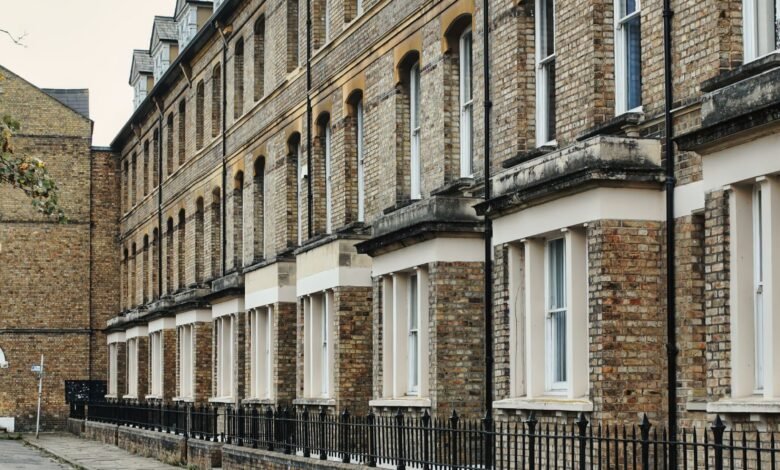
HMRC mansion tax inspections can include photographs of a home taken from a public street without the owner’s permission, the Government has confirmed. Treasury minister James Murray set out the position in a written parliamentary answer on 5 November 2026, as the Valuation Office prepares to value the homes that will fall under the new High Value Council Tax Surcharge from April 2028.
The disclosure has put the spotlight on how the so-called mansion tax will be enforced. Inspectors working for the Valuation Office Agency, which sits inside HMRC, must identify every residential property in England worth £2 million or more, and photographs are a central part of how they will do it.
HMRC mansion tax inspections — quick reference
| Question | Answer |
|---|---|
| What is the tax? | High Value Council Tax Surcharge, an annual charge on top of council tax |
| Which homes are in scope? | Residential property in England worth £2 million or more |
| When does it start? | 1 April 2028; first bills issued March 2028 |
| Annual charges | £2,500 (£2m–£2.5m); £3,500 (£2.5m–£3.5m); £5,000 (£3.5m–£5m); £7,500 (over £5m) |
| Who pays? | The owner, not the occupier |
| Who values the homes? | The Valuation Office Agency, part of HMRC |
| Street photographs | No permission needed from a public highway |
| Photographs inside the boundary | Occupier’s permission required |
| Draft bands visible | Autumn 2027 |
What ministers confirmed about street photographs
The confirmation came in answer to a question from Conservative MP David Simmonds, who asked what guidance the Valuation Office gives its officers on taking and keeping photographs outside and inside people’s homes for council tax purposes. In written answer UIN 39010, answered on 5 November 2026, Mr Murray said: “Permission is not required for photographs taken from the public highway.”
The same answer drew a clear line at the garden gate. Where photographs are taken from within the property boundary, including a garden or driveway, the occupier’s permission must be obtained. Mr Murray added that internal and external photographs are “an important part of a property survey” and that photographs forming part of council tax casework are retained under the Valuation Office’s information retention schedules.
The guidance behind the answer has also emerged through a Freedom of Information request. The Valuation Office’s inspection and data collection manual describes internal and external property photographs as “an essential part” of the survey, and says officials must obtain “explicit consent” before entering a property — consent that can be withdrawn at any point. If consent is withdrawn, inspectors may still record or photograph features visible from the public highway.
Reporting this week has described the manual as a “snoopers’ handbook”, and the HomeOwners Alliance updated its guidance for owners on 11 November 2026. The row has been driven by the scale of the valuation exercise ahead: the Office for Budget Responsibility expects about 165,000 homes to pay the surcharge in its first year.
How the Valuation Office will find the homes in scope
The Valuation Office will run a targeted valuation exercise to identify properties above the £2 million threshold, valuing each home at its April 2026 value. The Government says it will use a “model-assisted valuation approach”, feeding in comparable sales, property type, age, number of rooms and floor area.
Valuers will not rely on photographs alone. The agency also draws on Google Street View, aerial images from Ordnance Survey, publicly accessible plans and online property sales listings as part of its assessments. A separate 55-page document obtained through Freedom of Information tells inspectors that architectural style and characteristics are “nearly always more important than size or accommodation” when assessing a property, with mock Tudor and mock Georgian features among the details they are told to look for.
Owners should see draft bands in autumn 2027, and the first bills are due in March 2028, ahead of the charge taking effect on 1 April 2028. The surcharge was announced at Budget 2025 by then-Chancellor Rachel Reeves, consulted on between 19 May and 14 July 2026, and confirmed in the Budget on 28 October 2026, when the Government kept the threshold at £2 million despite reports it might fall to £1.5 million. It is being legislated for in section 3 of the Finance Bill 2026-27, with secondary legislation to follow in 2027.
The charge is England-only. Scotland plans its own new higher council tax bands, and Wales has nothing equivalent. For wider context on what the October Budget settled, see our report on “UK Budget 2026: What John Healey Is Expected to Announce on Wednesday 28 October“
The four bands and what owners will pay
The surcharge has four flat-rate bands, set out on GOV.UK. The amounts are fixed annual charges on top of ordinary council tax, and they will rise each year in line with consumer price inflation from 2029-30.
| Property value (April 2026) | Surcharge a year |
|---|---|
| £2 million to £2.5 million | £2,500 |
| Over £2.5 million to £3.5 million | £3,500 |
| Over £3.5 million to £5 million | £5,000 |
| Over £5 million | £7,500 |
The Government argues the charge addresses a longstanding unfairness: under the current system, a Band D home in Darlington worth around £400,000 pays £2,400 to £2,600 a year, while a Band H property in Mayfair valued at £10 million pays around £2,100. Fewer than 1 per cent of properties in England are expected to be above the threshold.
What happens if you refuse entry or information
Going inside a home is different from photographing it from the street. Internal inspections are arranged in advance and need the owner’s agreement, according to the HomeOwners Alliance. Council tax law in England already gives valuation officers a power of entry under section 25A of the Local Government Finance Act 1992, but the formal steps must be followed before a valuer can insist on entry.
Refusing to hand over information a valuation officer asks for is already an offence carrying a fine of up to £500 under the same Act, and obstructing an officer can carry a fine of up to £200, as ministers set out in answers reported by The Telegraph in August. The Government’s consultation proposed an eight-month window from April 2028 for the process, and a banding can be challenged and then appealed to the Valuation Tribunal for England.
HMRC has not published the full guidance its valuers will follow for the surcharge, so the exact rules on when photographs are taken and how long they are kept are not yet public. That gap is part of why the parliamentary answer has drawn so much attention: it is, for now, the clearest official statement of what inspectors can do without asking.
Why London and the South East face the biggest bills
Households in London and the South East are set to be hardest hit, because that is where property prices are highest. The Valuation Office has previously indicated it is likely to examine homes with an “indicative value” of £1.5 million or more in order to catch everything above the £2 million line, which means many owners below the threshold will still see their homes looked at.
The exercise is also a reminder of how much HMRC already knows about property ownership. HM Land Registry is sharing title register information with HMRC every month to pin down who owns what, and the surcharge falls on the owner rather than whoever lives in the property. That matters for landlords, second-home owners and families holding property in trusts, all of whom will need to check whether a home they own crosses the line.
The debate is far from settled. Critics call the levy a tax on London homeowners who bought decades ago, while ministers present it as a correction to a council tax system that has not been revalued in England since 1991. What is no longer in doubt is the method: before a single bill is sent, valuers will be looking at homes from the street, and they do not need to ask first. HMRC’s expanding use of data in tax enforcement was also the subject of our report on “HMRC AI Chatbot Tax Rules: Could the Taxman Ask to See Your ChatGPT History?“
Your questions on HMRC mansion tax inspections, answered
Q: Can HMRC photograph my house from the street without permission?
A: Yes. Treasury minister James Murray confirmed in a written answer on 5 November 2026 that permission is not required for photographs taken from the public highway.
Q: Do I have to let inspectors inside my home?
A: No, not without your agreement. Internal inspections are arranged in advance and need the occupier’s explicit consent, which can be withdrawn at any point. Valuation officers have a statutory power of entry under section 25A of the Local Government Finance Act 1992, but formal steps must be followed first.
Q: When does the mansion tax start?
A: The High Value Council Tax Surcharge takes effect on 1 April 2028. Owners should see draft bands in autumn 2027, and the first bills will be issued in March 2028.
Q: How much will I pay?
A: It depends on the April 2026 value of the home: £2,500 a year for £2 million to £2.5 million, £3,500 for £2.5 million to £3.5 million, £5,000 for £3.5 million to £5 million, and £7,500 for homes over £5 million. Charges rise with CPI inflation from 2029-30.
Q: Can I challenge my band?
A: Yes. A banding can be challenged and then appealed to the Valuation Tribunal for England. Full details are set out in the Government’s consultation on the High Value Council Tax Surcharge
Q: Does the surcharge apply outside England?
A: No. It applies only to residential property in England. Scotland plans its own new higher council tax bands, and Wales has nothing equivalent.