

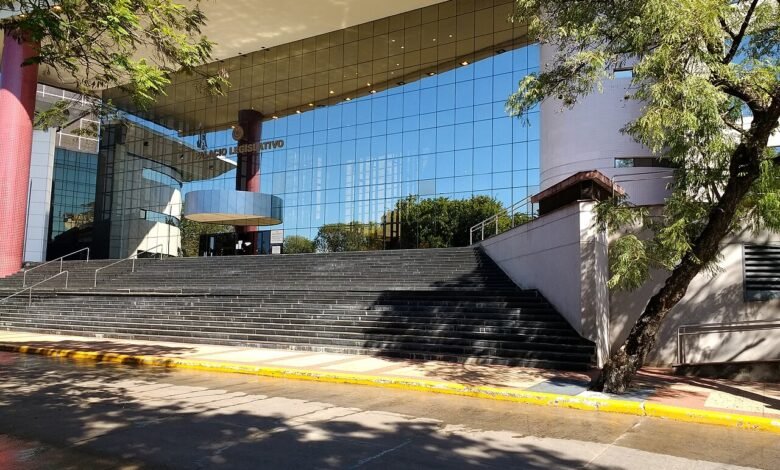
Santiago Peña, the Paraguay president impeached and arrested on Friday 6 November 2026, was removed from office and placed under house arrest within minutes, after the collapse of digital lender Ueno Bank froze the accounts of nearly three million people. Vice-President Pedro Alliana was sworn in as interim president the same evening, promising depositors locked out of their savings that they would not be abandoned.
The fall was strikingly fast. Impeachment proceedings had only begun on Wednesday, Peña offered to resign on Thursday, and by Friday night Paraguay had a new president and a former president under house arrest. 44 of the 45 senators voted in favour of removal, with one lawmaker absent, and the country’s worst political crisis in more than a decade is now a criminal investigation as well.
| Detail | What happened |
|---|---|
| Event | Impeachment and removal of President Santiago Peña |
| Date | Friday 6 November 2026 |
| Location | Asunción, Paraguay |
| Senate vote | 44 of 45 senators in favour of removal; one absent |
| Senate verdict | Guilty of dereliction of duty, announced by Senate President Basilio Núñez |
| Trigger | Collapse of Ueno Bank; Paraguay’s central bank seized it on Tuesday 3 November 2026 |
| Customers affected | Nearly 3 million — about half of Paraguay’s population of roughly 6 million |
| Allegations against Peña | Breach of trust, influence peddling and misappropriation of funds; Peña denies wrongdoing |
| Successor | Pedro Alliana, 52, sworn in as interim president on Friday 6 November 2026 |
| Term ends | August 2028 |
| Next step | Peña to be questioned by prosecutors on Saturday 7 November 2026 |
How Ueno Bank’s Collapse Froze Half a Country’s Savings
Ueno Bank was a digital-first lender that launched in 2021 and grew rapidly into one of Paraguay’s largest banks. It attracted customers through its digital model and served many people who had previously lacked access to banking services at all. That reach is what turned a bank failure into a national crisis.
Paraguay’s central bank took control of Ueno on Tuesday 3 November 2026, citing breaches of minimum solvency requirements and concerns over the bank’s financial position. The intervention froze accounts and bank cards belonging to nearly three million customers, leaving many unable to access their savings, wages or pensions. Protests followed in the capital, Asunción, for three days as people tried to recover their money.
The political damage came from Peña’s own connection to the lender. He had been a business partner in Grupo Vázquez, the business group that owned Ueno Bank, until March 2025, according to Reuters. Paraguayan newspaper ABC Color reported that inspectors had identified risky lending to insiders during a June inspection of the bank.
The criminal fallout spread quickly beyond the presidency. Authorities detained eight senior Ueno executives, including founder Miguel Vázquez and bank president Juan Manuel Gustale. A judge ordered six executives jailed pending trial and two others placed under house arrest, while prosecutors charged 27 bank officials and business associates with offences including breach of trust and attempted fraud.
Paraguay President Impeached: The Senate Vote That Ended a Presidency in Hours
The impeachment moved at extraordinary speed. Proceedings began on Wednesday 4 November, and on Thursday Peña announced his resignation in a video posted on X while lawmakers were debating his removal. Minutes later, the lower house voted 78–0 to impeach him, with lawmakers from his long-ruling Colorado Party joining the opposition after three days of demonstrations in Asunción.
Congress then refused to accept the resignation. That refusal mattered enormously, because accepting it would have let Peña keep his lifetime Senate seat and the immunity granted to former presidents. Instead, both houses pressed ahead with a trial, and on Friday the Senate convicted him. Senate President Basilio Núñez declared Peña guilty of poor performance in his duties, and the vote stripped him of that seat and that immunity in a single evening.
Peña is the second Paraguayan president ousted by impeachment since the end of General Alfredo Stroessner’s 35-year dictatorship in 1989. The impeachment charges alleged that he had conflicts of interest, manipulated regulatory oversight, diverted pension funds and participated in an institutional cover-up involving the central bank. Hundreds of protesters gathered outside the National Congress celebrated as the result was announced.
House Arrest and the Questions Waiting for Peña
Peña was arrested on Friday minutes after the Senate vote, and prosecutors ordered him to remain at a home in Asunción under house arrest. He will stay there until a judge decides where he should remain while the criminal process against him takes place, according to prosecutor Christian Benítez, cited by CNN.
He is due to be questioned by prosecutors on Saturday morning over allegations of breach of trust, influence peddling and misappropriation of funds, prosecutor Silvia Margarita Gonzalez Vester said. The most serious of the charges carry up to 10 years in prison, according to Associated Press reporting. Peña denies wrongdoing, and none of the allegations has been proven in court.
Attorney General Emiliano Rolón Fernández has opened three criminal investigations into the crisis. They will examine the allegations against Peña and other officials, how regulators supervised the bank and handled its failure, and why state money was deposited there. The investigations run alongside the political reckoning, and they will decide whether the former president faces trial.
Pedro Alliana Takes Over Until 2028
Pedro Alliana, 52, was sworn in as Paraguay’s new president on Friday evening, about an hour after Peña was removed. He will serve out the remainder of Peña’s term, which runs until August 2028. Alliana promised that compatriots going through a difficult time as a result of the financial collapse would be fully compensated, and that the millions affected would not be abandoned.
Alliana had remained loyal to Peña until Monday, when he announced he was suspending his bid for the party’s December primary elections while the government addressed the financial turmoil. An impeachment motion against Alliana over the same crisis failed to secure congressional approval, clearing his path to the presidency.
The reversal is striking because Peña, a former International Monetary Fund economist, had been welcomed in Washington just weeks ago as a close ally of the Trump administration. Within days, his own party had turned against him, his resignation had been refused, and he was under house arrest. The upheaval in Asunción came in a week of striking political change elsewhere, including in Washington, where Stephen Miller was named White House chief of staff.
The Wider Fallout Across Paraguay’s Institutions
The crisis has already claimed more than the presidency. Paraguay’s central bank chief, Carlos Carvallo, resigned on Tuesday, the same day the bank was seized. Carvallo had headed Ueno himself until 2023, a connection that sits at the heart of the questions about regulatory oversight.
Britain’s head of state has also had a testing week abroad, as King Charles returned from a nine-day Caribbean tour amid debate over politically charged royal deployments. But the scale of Paraguay’s institutional damage is in a different league: a president removed, a central bank chief gone, a major bank seized and millions of people locked out of their money.
What remains unresolved is the question that matters most to ordinary Paraguayans. The BBC reported that no details have been given of a compensation mechanism, funding arrangements or a timetable for repayment, despite Alliana’s pledge that depositors would be fully compensated. Until that plan appears, nearly half the country is still waiting to reach its own money, and the new president’s first test is whether his promise survives contact with the wreckage of Ueno Bank.
Frequently Asked Questions
Why was Santiago Peña impeached?
Paraguay’s Senate found Peña guilty of dereliction of duty and removed him from office on Friday 6 November 2026, with 44 of the 45 senators voting in favour and one senator absent. The impeachment charges alleged conflicts of interest, manipulated regulatory oversight, diverted pension funds and an institutional cover-up involving the central bank, all linked to the collapse of Ueno Bank. Peña denies wrongdoing, and the allegations have not been proven in court.
What happened to Ueno Bank?
Ueno was a digital lender launched in 2021 that grew rapidly into one of Paraguay’s largest banks, serving many people who had previously been unbanked. Paraguay’s central bank seized it on Tuesday 3 November 2026, citing breaches of minimum solvency requirements, freezing the accounts and cards of nearly three million customers. Eight senior executives were detained and 27 bank officials and associates were charged with offences including breach of trust and attempted fraud.
Who is Pedro Alliana?
Pedro Alliana, 52, was Paraguay’s vice-president and was sworn in as interim president on Friday 6 November 2026, about an hour after Peña’s removal. He will serve out the remainder of Peña’s term until August 2028, and has promised that depositors affected by the Ueno Bank collapse will be fully compensated.
Is Peña in prison?
No. Peña was placed under house arrest at a home in Asunción on Friday, minutes after the Senate removed him from office. He remains there until a judge decides where he should stay while the criminal process takes place, and he is due to be questioned by prosecutors on Saturday 7 November 2026 over allegations of breach of trust, influence peddling and misappropriation of funds.
Will Ueno customers get their money back?
Interim President Pedro Alliana has promised that affected depositors will be fully compensated and will not be abandoned. However, no detailed compensation mechanism, funding arrangement or repayment timetable has yet been announced, so millions of customers remain unable to access their savings for now.
Myth-Busting
Myth: Peña resigned, so the crisis ended with his departure.
Reality: Peña offered to resign on Thursday, but Congress refused to accept it and impeached him instead. That choice stripped him of his lifetime Senate seat and his immunity as a former president, and he was placed under house arrest facing a criminal investigation. A resignation would have protected him; impeachment did the opposite.
Myth: Ueno was a fringe lender that few people used.
Reality: Ueno had nearly three million customers, about half of Paraguay’s population of roughly six million, and it served many people who had previously had no bank account at all. Its collapse locked about half the country out of its own money, which is why the failure became a political crisis within days.




One Comment