
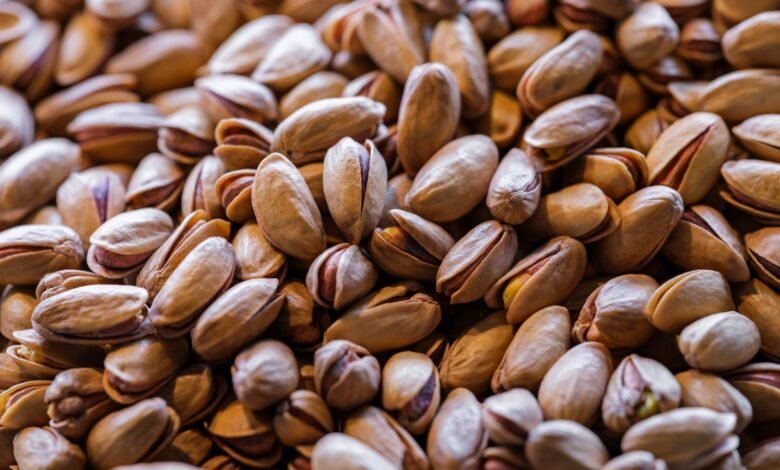
Pista and pistachio are the same nut. Pista is the name used across South Asia, from the Persian word pesteh, while pistachio is the English name that travelled through Greek and Latin. Both refer to the green seed of the Pistacia vera tree — and there is no nutritional difference between them, because there is nothing to differ. The only real difference is language.
Are pista and pistachio the same thing?
Yes. Pista and pistachio are two names for one edible seed. The tree is Pistacia vera, a member of the Anacardiaceae family, which also includes cashews and mangoes. Although pistachios are commonly called nuts, botanically they are the seeds of a drupe-like fruit — the same kind of structure as the stone inside a mango or a peach.
In Pakistan and India, people buy pista for traditional sweets, milk drinks and festive dishes. In English-speaking markets, the same ingredient is sold as pistachios. The confusion is understandable, but it is a naming difference, not a food difference. In shops, “pista” sometimes loosely means the in-shell nut popular in South Asian markets, while “pistachio” on a packet often means shelled, roasted or California-style nuts. That is a labelling habit, not a scientific distinction.
Why does one nut have two names?
The word pistachio has travelled a long way. It began as Middle Persian pistag, moved into Greek as pistakion, then into Latin as pistacium, followed by Italian pistacchio, before settling into English as pistachio. Meanwhile, “pista” — used across Hindi-Urdu, Punjabi, Gujarati, Marathi and Bengali — comes more directly from the Persian source word, reflecting centuries of trade between Persia and South Asia.
The nut itself is one of the oldest cultivated foods in human history, grown for thousands of years across Iran and Central Asia. Today the main producers are Iran, the United States, Turkey and Afghanistan, and the same species reaches every market under one name or the other.
What is in a pistachio?
A small handful carries a surprising amount of nutrition. These figures come from USDA FoodData Central for raw pistachios.
| Nutrient | Per 100g raw | Per 28g serving (about 49 kernels) |
|---|---|---|
| Energy | ~562 kcal | ~159 kcal |
| Protein | ~20.6g | ~6g |
| Fibre | ~10.3g | ~3g |
| Potassium | ~1,025mg | ~290mg |
Pistachios are also a source of vitamin B6 and natural antioxidants. Among nuts, they stand out for protein: a 28-gram serving gives about 6 grams, which is high for a snack that comes in its own shell. The shell matters, too — eating in-shell pistachios slows you down, and the pile of empty shells is a visible reminder of how much you have eaten.
What are the health benefits?
The benefits follow from the numbers. Protein and fibre help you feel full, which makes pistachios a more satisfying snack than crisps or biscuits. Potassium supports normal blood pressure as part of a balanced diet. And the fats in pistachios are mostly the unsaturated kind, the same family of fats found in olive oil.
Healthline’s guide to pistachio benefits runs through the same points in detail, from weight management to gut health, and Cleveland Clinic on pistachios makes the same case in plainer terms: a small, protein-rich snack with fibre, healthy fats and micronutrients. Neither source treats pistachios as a medicine, and neither should you — they are a good food, not a cure.
One caution belongs here. Pistachios are tree nuts, so anyone with a tree-nut allergy should avoid them entirely. And salted, roasted pistachios carry far more sodium than raw ones, so the unsalted kind is the better everyday choice.
How is pista used in cooking?
In South Asian cooking, pista is a garnish and a flavouring as much as a snack. Shelled kernels are ground into kulfi, kheer and barfi, scattered over sheer khurma, and blended into milk drinks. In Western cooking, pistachios turn up in pesto, biscotti, ice cream and salads, where their green colour and mild, buttery flavour stand out.
For snacking, the in-shell nut is the classic form: crack, eat, repeat. For cooking, buy shelled kernels, sometimes sold as pista giri, and chop or grind them as the recipe needs. Roasting deepens the flavour, but raw kernels keep the brightest green colour for garnishing.
How should you store pistachios?
Keep them in an airtight container in a cool, dark place, and in-shell pistachios will last for months. Shelled kernels go stale faster, so store them in the fridge, or in the freezer if you buy in bulk. Like any nut with natural oils, pistachios can turn rancid in heat or sunlight, so the kitchen cupboard above the stove is the worst spot in the house.
Buy them where turnover is high, and check the shells: a naturally split shell is normal, since the shell opens on its own when the kernel matures. Pistachios have even made the news for the wrong reasons — a Hotel Chocolat pistachio recall pulled Christmas boxes over a salmonella risk, a reminder that nuts, like any food, need proper handling. At the other end of the festive table, the Thanksgiving dinner cost for a family meal keeps rising, and a bowl of pistachios is one of the cheaper luxuries on it.
Frequently Asked Questions
Is pista the same as pistachio? Yes. Pista is the South Asian name and pistachio is the English name for the same seed from the Pistacia vera tree.
Which is healthier, salted or unsalted pista? Unsalted. The nutrition is identical, but salted pistachios add a large amount of sodium for no benefit.
How many pistachios should you eat a day? A standard serving is about 28 grams, roughly 49 kernels, which gives about 159 calories, 6 grams of protein and 3 grams of fibre.
Are pistachios good for weight loss? They can help, because protein and fibre keep you full, and the in-shell form slows down eating. Portion size still matters — they are energy-dense, so a handful, not a bowlful, is the serving.
Can you eat pistachios every day? Yes, as part of a balanced diet, unless you have a tree-nut allergy. A small daily handful is a reasonable habit.