
Remembrance Sunday 2026: King Charles Leads Nation in Silence at the Cenotaph

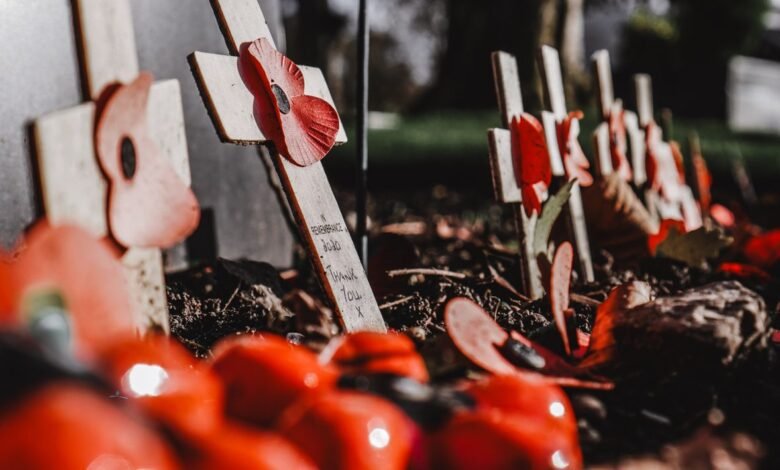
Remembrance Sunday 2026 falls today, Sunday 8 November, and the nation will fall silent at 11am as King Charles III leads the National Service of Remembrance at the Cenotaph on Whitehall in central London. The service honours British and Commonwealth military and civilian servicemen and women who died in the two world wars and later conflicts, and it closes with around 10,000 veterans marching past the war memorial.
The King will be joined by senior members of the Royal Family, the Prime Minister, political leaders and faith representatives. Whitehall opened to the public at 8am, and the ceremony will be broadcast live on the BBC, ITV and Sky News for those who cannot be there in person.
| Detail | Remembrance Sunday 2026 |
|---|---|
| Date | Sunday 8 November 2026 |
| Location | The Cenotaph, Whitehall, London |
| Two-minute silence | 11:00am, marked by guns fired by the King’s Troop on Horse Guards Parade |
| Service ends | 11:25am, followed by the Royal British Legion march-past |
| Led by | King Charles III, with senior royals, the Prime Minister and faith leaders |
| March-past | Around 10,000 veterans from more than 300 armed forces and civilian organisations |
| Broadcast | BBC, ITV and Sky News |
| Whitehall access | Open to the public from 8am; closed to traffic from 3am to 5:30pm |
| Armistice Day | Wednesday 11 November 2026, two-minute silence at 11am |
| Field of Remembrance | Westminster Abbey, 6 to 15 November, 8:30am to 6pm |
What Happens at the Cenotaph This Morning
The morning follows a timetable published by the Department for Culture, Media and Sport, which coordinates the service with the armed forces and veterans’ organisations. Whitehall opened to the public at 8am, with security checks and entry limited once the area fills. Military detachments form up on the Cenotaph from 10:30am, and participants process out from 10:50am.
At 11am, Big Ben’s chimes and guns fired by the King’s Troop on Horse Guards Parade mark the start of the national two-minute silence. The service then runs for 25 minutes, ending at 11:25am, when Royal British Legion detachments disperse past the Cenotaph in the march-past. Spectators are asked not to take photographs during the silence, when shutter noise can offend.
Roads around the ceremony are closed for much of the day. Whitehall is shut to traffic from 3am to 5:30pm, and Great George Street is closed to the public. Large relay screens stand along Whitehall Place and King Charles Street for those further back in the crowd.
The King’s Wreath and the Royal Family at Whitehall
Buckingham Palace confirmed on Friday that the King and Queen Camilla will be joined at the Cenotaph by the Prince and Princess of Wales, the Princess Royal and Vice Admiral Sir Tim Laurence, the Duke and Duchess of Edinburgh, and the Duke and Duchess of Gloucester. The King will lay the first wreath, followed by the Prince of Wales and other senior royals, political leaders and Commonwealth representatives.
The King’s wreath carries a deliberate link to earlier generations of the monarchy. Its design pays tribute to wreaths traditionally laid by his grandfather, King George VI, and his mother, Queen Elizabeth II, with poppies arranged against black leaves and a ribbon in the King’s racing colours of scarlet, purple and gold. Queen Camilla’s wreath, laid on her behalf by her Equerry, features her own racing colours, inherited from her grandfather.
Both wreaths were made by The Poppy Factory, an organisation with a history of producing Remembrance wreaths for the Royal Family spanning more than 100 years. The Prince of Wales will lay a wreath previously used by King Charles when he held the title of Prince of Wales, while his own wreath carries the Prince of Wales feathers with a ribbon in Welsh red.
The Royal Family gathered for the Festival of Remembrance at the Royal Albert Hall on Saturday evening, the eve of Remembrance Sunday. The King and Queen were joined by the Prince and Princess of Wales for the Royal British Legion concert, hosted by Clive Myrie with performances from Alfie Boe and Tom Odell, and broadcast on BBC One at 9pm. The King was announced as a patron of the Royal British Legion last year, and the festival marked the start of a weekend of commemoration that continues at the Cenotaph today.
Two Anniversaries Marking the 2026 Service
This year’s commemorations carry particular weight because 2026 marks two significant anniversaries. The service falls 35 years after the end of the First Gulf War, and 15 years since the conclusion of British military operations in Iraq under Operation Telic. Veterans of both campaigns are among those taking part in the march-past, alongside veterans of the two world wars and later conflicts.
The anniversaries sit at the heart of what Remembrance Sunday is for. The day is held on the Sunday closest to Armistice Day on 11 November, the date the First World War ended in 1918, and it has grown to honour all who have died in service since. The Royal British Legion, which organises the march-past, describes the day as a chance for the country to remember together, whatever the conflict or the generation.
Across the country, the same pattern will repeat at war memorials, cathedrals and village greens. Local services follow the same 11am silence, with wreaths laid by mayors, civic leaders and veterans’ associations. The Field of Remembrance at Westminster Abbey, where thousands of small wooden crosses are planted by families and regiments, stays open daily from 6 to 15 November, from 8:30am to 6pm.
How to Watch and Take Part Across the Country
No ticket is needed to watch the Cenotaph service from the pavements of Whitehall and Parliament Street, though spaces fill quickly and entry is subject to security checks. Anyone arriving late may find the area full, and the relay screens offer the next best view. For those staying at home, the BBC, ITV and Sky News all carry the service live, and the government’s official guidance sets out timings, access and viewing arrangements for the day.
The poppy remains the visible symbol of the weekend. The Royal British Legion’s Poppy Appeal, which began on 29 October, runs through the period of remembrance, with volunteers collecting across the country. The appeal funds the Legion’s work supporting veterans and their families throughout the year, and the red poppy worn on lapels and uniforms traces back to the poppies that grew on the battlefields of the First World War.
Armistice Day itself follows on Wednesday 11 November, when a shorter two-minute silence will be observed at 11am at war memorials and in workplaces, schools and public places across the country. Unlike Remembrance Sunday, there is no large public march, but the silence carries the same meaning: two minutes set aside to remember those who did not come home.
Frequently Asked Questions
When is Remembrance Sunday 2026? Remembrance Sunday 2026 falls today, Sunday 8 November. It is always held on the second Sunday in November, the Sunday closest to Armistice Day on 11 November.
What time is the two-minute silence? The national two-minute silence begins at 11am at the Cenotaph on Whitehall, marked by guns fired by the King’s Troop on Horse Guards Parade. The service ends at 11:25am.
Who leads the Remembrance Sunday service? King Charles III leads the nation in the two-minute silence and lays the first wreath at the Cenotaph. He is joined by senior royals, the Prime Minister, political leaders and faith representatives.
How many veterans take part in the march-past? Around 10,000 veterans take part in the Royal British Legion’s march-past, representing more than 300 armed forces and civilian organisations.
What is the difference between Remembrance Sunday and Armistice Day? Remembrance Sunday, on the closest Sunday to 11 November, is the main public ceremony, centred on the Cenotaph service and the march-past. Armistice Day, always on 11 November itself, is marked by a shorter two-minute silence at 11am, with no large public march.
What People Often Get Wrong
A common mix-up is to treat Remembrance Sunday and Armistice Day as the same event. They are not. Armistice Day always falls on 11 November, the anniversary of the First World War armistice in 1918, while Remembrance Sunday is the nearest Sunday to that date and carries the main national ceremony at the Cenotaph. Another misunderstanding is that the poppy honours only the First World War. The Royal British Legion’s remembrance covers all British and Commonwealth service personnel who have died in conflict since, which is why veterans of the Gulf War, Iraq and later operations march past the Cenotaph alongside veterans of the two world wars.



One Comment