Three Royal Navy Nuclear Submarines at Sea in Rare Deployment — What It Means for Britain’s Deterrent

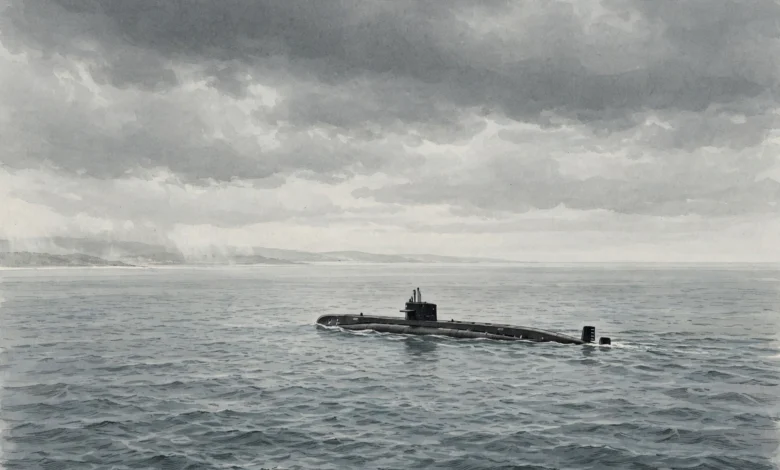
Three of Britain’s four Vanguard-class nuclear submarines are reportedly at sea at the same time, an unusual deployment that has drawn attention to the state of the Royal Navy’s deterrent fleet. The reported deployment was described in coverage on 28 October 2026, with the fourth boat, HMS Victorious, said to be undergoing deep maintenance at Devonport. The Royal Navy has declined to confirm the submarines’ tasks, citing security reasons, so the precise missions of the three boats at sea remain unconfirmed.
The development matters because Britain’s nuclear deterrent rests on a small fleet of four boats. Under the Continuous At-Sea Deterrent policy, at least one nuclear-armed submarine is on patrol at all times. When three boats are at sea together, it suggests a shift in fleet availability after years in which maintenance pressures limited how many boats could be deployed at once.
Three Vanguard-Class Boats at Sea: What Has Been Reported
Reports describe the deployment as unusual rather than routine. A Navy source cited in the coverage described the timing as a coincidence and said it was not related to any direct threat, playing down speculation about an escalation in nuclear tensions. That reassurance is itself unconfirmed by the Ministry of Defence, which does not disclose operational details about submarine movements.
Experts cited in the reporting believe the other two vessels beyond the on-patrol boat could be conducting sea trials and preparing for future operations. Sea trials test a submarine’s systems and performance before it undertakes operational duties. If that reading is correct, the deployment reflects recovery in availability rather than a response to a single incident.
| Item | Reported position |
|---|---|
| Boats at sea | Three of four Vanguard-class submarines, reportedly |
| Boat in maintenance | HMS Victorious, said to be in deep maintenance at Devonport |
| Fleet | HMS Vanguard, HMS Victorious, HMS Vigilant, HMS Vengeance |
| Deterrent policy | Continuous At-Sea Deterrent — at least one nuclear-armed boat on patrol at all times |
| Missile system | Trident |
| Official confirmation | Not confirmed — Royal Navy declined to confirm tasks, citing security |
| Reported explanation | Unnamed Navy source described timing as a coincidence, not linked to a direct threat |
Why Fleet Availability Has Been Under Strain
The Vanguard fleet has faced lengthy maintenance periods that stretched patrols for crews. In 2025, HMS Vanguard reportedly spent more than 200 days at sea, among its longest deployments, while HMS Victorious completed a 207-day deployment in 2021, one of the longest publicly known patrols by a British deterrent submarine. Long patrols place sustained pressure on submariners and their families, and on the boats themselves.
A source quoted in the coverage welcomed the reported return of a third boat, arguing it could end excessively long patrols and move the Navy from a two-boat rotation to a three-boat rotation. That framing, if borne out, would be a meaningful operational improvement. It would also raise the question of whether the improvement can be sustained once the boats now at sea return for their own maintenance periods.
The Ministry of Defence has reiterated the importance of the deterrent without disclosing operational details. Its stated position is that the nuclear deterrent is the cornerstone of national security, protecting the UK and NATO allies every moment of every day, and that Britain remains the only European ally to commit its nuclear deterrent to the defence of NATO. That statement is policy, not confirmation of this deployment.
What Three Boats at Sea Does — and Does Not — Signal
Three boats at sea does not, on the evidence publicly available, signal a change in nuclear posture. Deterrence depends on an adversary believing a retaliatory strike would survive a first attack, and that credibility is maintained by keeping at least one boat hidden at sea. Having additional boats at sea for trials or preparation does not alter that logic, though it may demonstrate that more of the fleet is available than in recent years.
The reporting also sits alongside wider security pressures, including the US-Iran war and the recent RAF Fairford incident, in which US bombers were withdrawn from a Gloucestershire base on security grounds. No evidence has been published linking the submarine deployment to those events, and the unnamed source account explicitly plays down such a link. Readers should treat any claim of a direct connection as speculation unless the Ministry of Defence says otherwise.
For the UK Budget 2026 debate, the deployment adds context to defence spending decisions. The Budget, due on Wednesday 28 October 2026, is expected to set out how the government finances its defence investment programme, with details of meeting NATO’s 3.5 per cent of GDP defence spending target expected to be delayed until next year. Submarine availability is one of the most expensive and least visible parts of that programme, and its costs will feature in the years ahead as the Vanguard boats are replaced.
The Dreadnought Replacement and the Bill Ahead
Four Dreadnought-class submarines are due to replace the Vanguard boats, at a reported cost of £7.75 billion per unit. Work has recently begun on a building at the Royal Naval Armament Depot at Coulport that will support the future class, including a facility to load tactical weapons onto the new boats. The House of Commons approved replacing the current submarines in 2016, despite opposition from anti-nuclear campaigners and concern about cost.
The transition will not be quick. New boats must be built, armed, tested and brought into service while the ageing Vanguard fleet continues to carry the deterrent. Any gap in availability during that handover would be politically and strategically sensitive. That is why fleet availability now, even in the form of sea trials, is watched closely by defence analysts.
What remains unknown is as important as what has been reported. The identities of the three boats at sea, whether more than one is carrying nuclear-armed missiles, and how long the deployment will last have not been officially confirmed. Until the Royal Navy or the Ministry of Defence provides that detail, the story is best read as a reported sign of improving availability, not as a confirmed operational shift.
Questions Readers Are Asking About the Vanguard Deployment
How many Vanguard-class submarines does Britain have? Four: HMS Vanguard, HMS Victorious, HMS Vigilant and HMS Vengeance, which carry the Trident missile system.
Is it normal for three to be at sea at once? Reports describe it as unusual. The Navy has for a prolonged period operated with two boats available at any one time, according to a former senior naval source cited in the coverage.
Does three boats at sea mean Britain is preparing for war? No evidence published so far supports that reading. A Navy source cited in the reporting described the timing as a coincidence and said it was not related to any direct threat.
Why won’t the Royal Navy confirm the details? The Navy declines to discuss submarine operations for security reasons. Deterrence relies on uncertainty about where patrol boats are, so operational secrecy is standard practice.
What happens next? Watch for any Ministry of Defence statement, for the Budget’s defence financing detail on 28 October 2026, and for further reporting on whether the boats return to port or remain at sea. The next confirmed milestone is the Dreadnought programme’s progress at Coulport and Barrow.