Salmonella Enteritidis found in eggs imported from Ukraine has been linked to 78 confirmed cases in England and Wales, the UK Health Security Agency (UKHSA) reported in its Health Protection Report on Thursday, 29 October 2026. The Food Standards Agency (FSA) has told businesses to withdraw and recall eggs from one Ukrainian producer, and consumers not to eat them. Eggs produced in the UK are not affected, the FSA said.
The strain at the centre of the update is Salmonella Enteritidis t5.8998. UKHSA detected it in samples from a single Ukrainian producer after testing nearly 3,000 imported eggs. Whole genome sequencing confirmed that nine isolates from three positive samples were the same strain, and that strain is associated with cases of illness in people.
Quick Reference Summary Table
| Fact | Detail |
|---|---|
| Bacterium and strain | Salmonella Enteritidis t5.8998 |
| Source identified | Eggs from one Ukrainian producer, Yasensvit Ltd, Kyiv |
| Shell code to check | 3UA1012066 |
| Confirmed cases (UKHSA, data to 13 October 2026) | 78 confirmed cases: 76 in England, 2 in Wales; 40 reported in 2026 |
| Where cases concentrated | London (32 of 76 England cases) and East of England (24 of 76) |
| Age range and median | 0 to 99 years; median age 30 |
| FSA action | Food Alert for Action issued 10 October 2026: withdraw and recall the affected eggs |
| UK-produced eggs | Not affected, per the FSA; major-supermarket eggs are UK-produced |
| Link to larger outbreak | Not established — work is ongoing on whether t5.8998 links to the separate t5.9411 investigation |
How the Contaminated Eggs Were Traced Through Genomic Testing
UKHSA and public-health agencies across the UK have been investigating a Salmonella Enteritidis outbreak linked to imported eggs since May 2026. As part of that work, almost 3,000 imported eggs were microbiologically tested. In October 2026, Salmonella Enteritidis was detected in three samples, each of six pooled eggs, from the single Ukrainian producer.
Whole genome sequencing then matched the bacteria from the eggs to the t5.8998 cluster in people. As of 13 October 2026, that cluster counted 78 confirmed cases, with sample dates ranging from 17 December 2024 to 26 September 2026. Forty of those cases were reported in 2026. Only three of the 78 cases reported international travel, and UKHSA said the evidence gathered so far does not suggest the cluster is associated with travel.
One small local outbreak in June 2026, involving six confirmed cases linked to a restaurant in Yorkshire and Humber, used non-UK eggs for certain dishes, according to UKHSA. The agency has not said that restaurant was supplied by this producer, and that detail remains part of the wider investigation.
Why the Shell Code Matters More Than the Box
The affected eggs were mainly supplied through wholesalers and the catering trade, and some may have been sold in small shops, the FSA said. They are not sold in major supermarkets, which stock UK-produced eggs. Because UK businesses may have repacked the eggs, the outer packaging can carry a different name or packing-centre details.
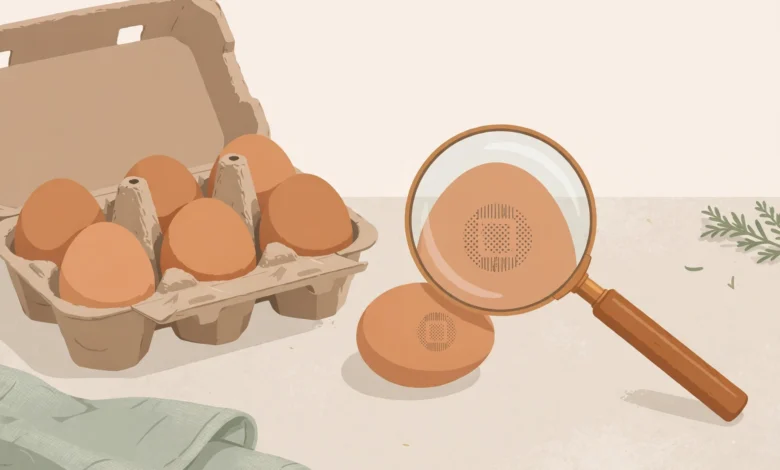
That is why the code stamped on the shell is the reliable check. Eggs carrying the code 3UA1012066, from the Yasensvit business in Kyiv, are the ones covered by the recall. Consumers who find that code should not eat the eggs. Businesses should withdraw them, and recall them where retail sales have occurred.
The FSA’s earlier alert, issued on 10 October 2026, described the strain as associated with 36 cases in England in 2026 at that stage. The 29 October UKHSA report gives the fuller cluster picture: 78 confirmed cases in total, with 40 reported in 2026. The two figures reflect reports at different dates, not two different outbreaks.
What the Recall Means for Caterers, Shops and Households
Caterers, manufacturers and wholesalers were the primary recipients of the Food Alert for Action, alongside consumers. The FSA is working with local authorities to make sure the alert is actioned, and with international partners as the investigation continues. UKHSA and the FSA said they are still evaluating the impact of the withdrawal on the supply chain and on Salmonella cases.
For households, the practical advice is unchanged for eggs in general. Thoroughly cooked eggs handled hygienically should not present a food-safety risk, the FSA said. People handling eggs, eggshells or egg packaging should wash their hands thoroughly with warm water and soap and dry them properly.
Vulnerable groups face stricter advice for raw or lightly cooked eggs. They should only eat raw or lightly cooked eggs carrying the British Lion mark or produced under the Laid in Britain scheme. Anyone with symptoms should stay away from work or school until 48 hours after symptoms stop, under standard public-health advice reported with the alert.
How Salmonella Illness Usually Presents, and Who Faces Higher Risk
For most healthy people, Salmonella causes an unpleasant but self-limiting stomach illness, often with diarrhoea, according to experts at the London School of Hygiene and Tropical Medicine. It can occasionally cause serious disease, particularly in young children, older adults and people with weakened immune systems.
That risk profile is one reason the recall targets the catering chain as well as retail sales. A single contaminated batch can reach many diners through restaurants and food manufacturers, even when individual shoppers never buy the eggs directly. Genomic sequencing is what allowed investigators to connect cases across different places to one strain.
Work is still ongoing to establish whether the t5.8998 strain has epidemiological and food-chain links to the larger, ongoing Salmonella investigation involving strain t5.9411 and related clusters. UKHSA said the t5.8998 strain is not closely genetically related to the strains linked to that larger investigation. No further control measures beyond the current alert have been announced.
Frequently Asked Questions
Which eggs are affected by the recall?
Eggs from the Ukrainian producer Yasensvit Ltd, stamped with the shell code 3UA1012066. All dates and sizes from that business are covered by the Food Standards Agency’s withdrawal and recall instruction.
Are British eggs safe to eat?
Yes, according to the FSA. Eggs produced in the UK are not affected by this recall, and eggs bought in major supermarkets are UK-produced. Look for the British Lion mark for the assurance scheme covering vaccination and food-safety controls.
What should I do if I find the code 3UA1012066 on an eggshell?
Do not eat the eggs. Dispose of them, wash your hands thoroughly, and clean any surfaces or equipment that touched them. Businesses should withdraw the eggs and recall any retail sales.
How many people have been affected?
UKHSA’s 29 October 2026 report counts 78 confirmed cases in the t5.8998 cluster, with 40 reported in 2026, 76 cases in England and two in Wales. The true number of infections may be higher, as many people with a short stomach illness are never tested.
Is this the same as the larger Salmonella outbreak under investigation?
No link has been established. UKHSA said t5.8998 is genetically distinct from the strains in the larger ongoing investigation, and work continues on whether any epidemiological or food-chain link exists.