
COP31 climate talks collapse was confirmed in Antalya on Sunday 22 November 2026, after the European Union and other countries rejected a final draft deal that made no mention of fossil fuels. Turkey’s COP31 president Murat Kurum told the closing plenary there was no consensus and no new text would follow, ending more than two weeks of negotiations without an overarching agreement.
The failure makes COP31 the longest climate summit on record and the first to end without a deal adopted by all countries since Copenhagen in 2009. Australia’s president of negotiations Chris Bowen called the outcome very disappointing, while Ireland’s climate minister Darragh O’Brien, speaking for the EU, said the bloc would not endorse a pact that ignored the main driver of global warming.
COP31 Climate Talks Collapse — Quick Reference
| Item | Detail |
|---|---|
| Outcome | No overarching agreement, cover decision or Antalya Pact adopted on Sunday 22 November 2026 |
| Venue | Antalya, Turkiye; talks due to end Friday 20 November, ran about 44 hours into overtime |
| Presidency | Turkiye, led by Environment Minister Murat Kurum; Australia led negotiations through Chris Bowen |
| Who rejected the draft | European Union, Panama, the Marshall Islands and Norway among those objecting |
| Core dispute | Final 10-page draft omitted fossil fuels, coal, oil, gas and phase-out language |
| Finance dispute | Call to triple adaptation finance by 2035 with no baseline and no specific numbers |
| Carbon proposal | Faster carbon-removal development, including a goal to capture, reuse and store 1 billion metric tons of carbon |
| Electrification goal | Raise electricity to 35% of final energy use by 2035, from around a fifth today; more than 90 countries signed the pledge |
| Precedent | First COP without a deal adopted by all since Copenhagen in 2009 |
| Next summit | Scheduled for Addis Ababa, Ethiopia, in November 2027 |
How the Final Sunday Unravelled in Antalya
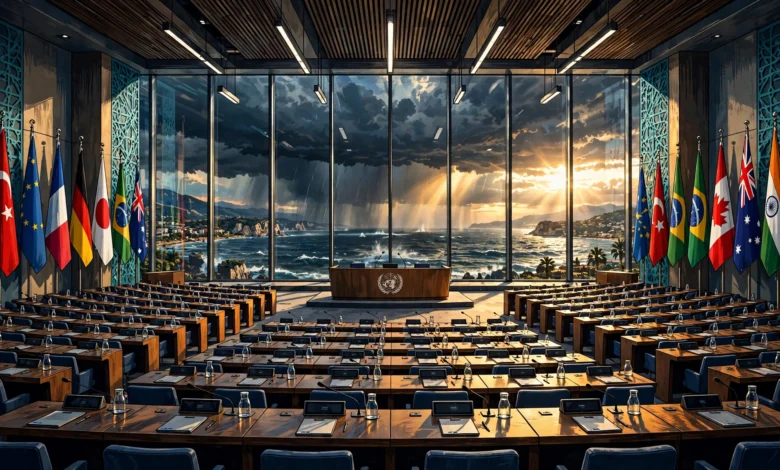
The final draft was released on Sunday, two days after the conference was scheduled to end, and Kurum gave negotiators only about three hours to object before the closing meeting. At that plenary he conceded defeat, saying: “It is clear that there are parties in this hall who oppose this text. We recognise that there is no consensus on this document. Therefore, these decisions have not been adopted.”
Reuters reported Kurum then closed the door on any rescue text, telling delegates: “There is nothing to do, we did all that we could. There will be no new text from now on.” He later left the stage while country representatives were still delivering speeches, underlining how abruptly the COP31 climate talks collapse became final.
The talks had opened on Monday 9 November with a finance row and a late start, as covered when COP31 opened in Antalya under the same dual presidency. Smaller issues did make progress during the fortnight, but the main political bargain never landed.
The Two Words That Sank the Antalya Pact
Fossil fuels decided the summit. The first draft cover decision, published on Monday 16 November, called for the immediate transition away from fossil fuels in energy systems, yet every later draft stripped the phrase out despite a push by more than 100 countries to keep it.
A slimmer text on Thursday 19 November removed every mention after Saudi Arabia and other major oil and gas producers objected, according to Al Jazeera reported from the closing session. The final proposal referred back to the Dubai agreement of 2023, when countries agreed to transition away from fossil fuels, without naming coal, oil or gas at all.
O’Brien told the chaotic closing session: “We will not endorse a cover decision, or an Antalya Pact, that does not even mention fossil fuels, which is the key driver of climate change.” He added: “We will not accept negotiating backwards in time. And we will not accept a COP that greenwashes fossil fuel.”
Panama also formally objected, saying the text failed to address the scale and urgency of the crisis. Belgium’s climate minister Jean-Luc Crucke backed the rejection, saying: “It’s not the end of multilateralism, but there has to be courage to say no.”
Carbon Capture, Electrification and the Finance Gap
The rejected draft would have acknowledged for the first time that warming is on course to exceed 1.5 degrees Celsius, while calling for faster carbon-removal technology to reverse the overshoot later. Oil-producing countries pressed for that language, and a Saudi delegate told the plenary he was surprised at resistance to a technology he presented as a concrete solution.
Critics warned the carbon goal could license continued pumping, because capture remains expensive and unproven at scale. The draft set a specific target to capture, reuse and store 1 billion metric tons of carbon, a scale campaigners said risked distracting from direct emissions cuts.
Finance proved equally divisive, as Reuters reported that disagreements over fuels and climate finance were the dealbreakers. Developing countries criticised a call to triple adaptation finance by 2035 that named no baseline and no cash figures for communities already facing floods and heatwaves.
Turkiye’s electrification goal survived in the text, lifting electricity to 35% of final energy consumption by 2035, and Bowen noted more than 90 countries signed the related pledge. Campaigners replied that electrification powered by coal and gas would not limit warming, and the costs would fall hardest on poorer nations without a clear fossil-fuel pathway.
Why This Failure Lands Harder Than Previous Deadlocks
COP31 was the first summit since the UN confirmed warming is set to exceed 1.5 degrees Celsius, with current policies pointing far higher and impacts already stark from Nepal flooding to deadly European heat. The United States did not take part under President Donald Trump, removing the largest historical emitter from the finance talks altogether.
Britain faces the same pressure at home, where extreme weather is already cutting into Britain’s public services and adaptation bills keep rising. That domestic strain helps explain why vulnerable countries refused a text they saw as words without money or emissions cuts.
The Antalya failure does not erase obligations agreed at earlier summits or the legal frameworks governing climate action. What it removes is political momentum, leaving the next summit in Addis Ababa in November 2027 to rebuild trust after a fortnight that ended with an empty hall and no pact.
Questions Readers Are Asking About the COP31 Climate Talks Collapse
Why did the COP31 climate talks collapse?
The EU and others rejected a final draft that omitted fossil fuels and offered no firm finance numbers. Kurum confirmed there was no consensus, so the cover decision and Antalya Pact were not adopted.
How long did COP31 run over time?
The summit was due to end on Friday 20 November but ran about 44 hours into overtime before collapsing on Sunday 22 November. That makes it the longest COP on record.
Which countries blocked the deal?
The European Union, Panama, the Marshall Islands and Norway were among those that rejected the text. Adoption needed near-unanimous consensus among nearly 200 nations, so sustained objections were enough to stop it.
What was in the rejected draft?
It acknowledged the 1.5 degrees overshoot, backed faster carbon removal including 1 billion metric tons of captured carbon, and kept the 35% electrification goal for 2035. It referenced the Dubai transition agreement without naming fossil fuels, coal, oil or gas.
What happens after COP31?
Existing Paris Agreement obligations and UN climate frameworks remain in place, and smaller decisions from Antalya still stand. The next annual summit is scheduled for Addis Ababa, Ethiopia, in November 2027.
Myth check: does no deal mean climate action stops?
No. Countries keep their existing pledges, laws and finance duties from earlier summits, and more than 90 nations signed the electrification pledge in Antalya. The loss is a shared political signal on fossil fuels and new adaptation money, not the entire climate regime.