Kayem Meat Recall: 1.58 Million Pounds of Hot Dogs, Bacon and Deli Meats Pulled Over Temperature Abuse

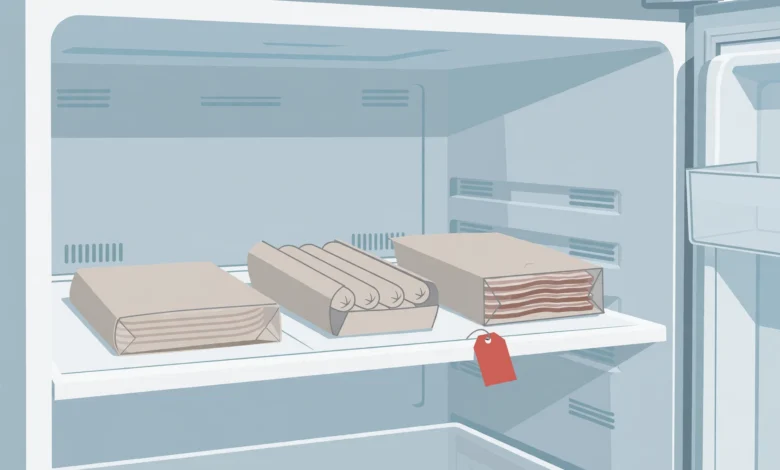
Kayem Foods is recalling about 1.58 million pounds of ready-to-eat meat and poultry in the United States after a warehouse cooling failure may have left the products stored at unsafe temperatures. The US Department of Agriculture’s Food Safety and Inspection Service (FSIS) announced the recall on Saturday 17 October 2026, and searches for the recall surged again on Saturday 14 November, with Google Trends recording 200,000+ searches in the United States.
The recall covers hot dogs, bacon, sausage, turkey breast, ham and other deli meats sold under nine brand names, and it carries the FSIS Class I label, the agency’s highest-risk category. No illnesses had been confirmed when the recall was announced, but the official advice is blunt: do not eat any affected product.
Kayem Meat Recall — Key Facts at a Glance
| Fact | Detail |
|---|---|
| Company | Kayem Foods Inc., Chelsea, Massachusetts |
| Products recalled | About 1,584,361 pounds of ready-to-eat meat and poultry |
| Recall announced | Saturday 17 October 2026 (FSIS Recall 026-2026) |
| Risk class | Class I — the FSIS highest-risk category |
| Cause | Possible temperature abuse during storage; warehouse cooling-system malfunction |
| Production dates | About 31 March to 7 October 2026 |
| Shipped | 7 June to 14 October 2026, nationwide and in Hong Kong |
| Brands | Kayem, Al Fresco, McKenzie, Triple M, Deutschmacher, Jordan’s, Genoa, Essem, Winnisimmet |
| Establishment numbers | EST. M/P 7839, EST. P 20935A, EST. M 9520 |
| Illnesses confirmed | None reported in the 17 October announcement |
| Advice | Do not eat affected products; throw away or return to the place of purchase |
Why a Cooler Failure Put 1.58 Million Pounds on the Recall List
Kayem’s own release, dated 16 October 2026, blamed a cooling-system malfunction at one of its warehouses that caused storage temperatures to deviate from their intended levels. The FSIS announcement the next day said the products may have experienced temperature abuse during storage, and it classified the action as Class I, meaning there is a reasonable probability that eating the food could cause serious adverse health effects or death.
The scale follows from the dates. Products were made over roughly 27 weeks, from about 31 March to 7 October 2026, and stored or shipped between 7 June and 14 October. The official list covers 68 products across nine brands, and they reached retail stores and foodservice operators across the United States and in Hong Kong. That long window is also why the recall still matters a month later: best-by dates on some packs run to February 2027, so affected products may still be sitting in home freezers.
The Warm Delivery That Exposed the Problem
The problem came to light on 1 October 2026, when a retail customer reported that a Kayem delivery had arrived warm. Kayem investigated, found that a warehouse cooler had not held a safe temperature, and voluntarily recalled everything that may have passed through it.
Kayem president and chief executive Matt Monkiewicz apologised to customers and said the company had corrected the cooling fault. The FSIS notice, published in full in the agency’s recall announcement, lists the products, their labels and their UPC codes so shoppers can match a pack in their fridge against the official list.
How to Check Your Fridge and Freezer in 60 Seconds
Do not judge a pack by its brand name alone. Nine brands are involved, so the check that matters is the establishment number printed inside the round USDA mark of inspection: EST. M/P 7839, EST. P 20935A or EST. M 9520. Then match the UPC code and the best-by date against the FSIS recall notice.
| Brand | Product | UPC | Best-by |
|---|---|---|---|
| Kayem | Fenway Franks, 14 oz | 003077101114 | 22–29 October 2026 |
| McKenzie | Cob Smoked Uncured Bacon, 12 oz | 003077109544 | 2 August–25 November 2026 |
| Al Fresco | Sweet Apple Fully Cooked Chicken Sausage, 11 oz | 003077102637 | 22 July–25 December 2026 |
These are examples only. The full list runs to 68 items, so a pack that is not in this table can still be affected. Check the establishment number first, then the UPC, then the date. A pack made outside the 31 March to 7 October 2026 production window is not part of this recall.
What to Do If You Find a Recalled Pack
Do not eat the product, and do not taste it to check whether it is safe. Temperature abuse cannot be seen, smelled or tasted, and cooking does not make a recalled pack safe to eat. Throw the product away or return it to the place of purchase.
Anyone concerned about health effects after eating a possibly affected product should contact a healthcare provider. Kayem’s customer service line is 800-426-6100, Monday to Friday, 7.30am to 4pm Eastern, and the USDA Meat and Poultry Hotline is 888-674-6854.
Why the Recall Is Back in Searches a Month Later
The recall was announced on 17 October, yet it is drawing 200,000+ US searches on 14 November because the products have not all left circulation. Best-by dates stretching into early 2027 mean packs bought weeks ago can still be in freezers, and fresh roundups of active US food recalls keep putting the Kayem list in front of shoppers.
Shoppers in the UK faced a similar check this month, when the Baxters soup recall pulled 400g cans of Cullen Skink over fears they could swell and rupture. US health regulators have had a busy November on other fronts too, including the FDA’s new warning labels on GLP-1 drugs. In each case the practical advice is the same: check the code on the pack, do not eat the affected product, and follow the recall notice.
Frequently Asked Questions
Q: Which products are included in the Kayem meat recall?
A: About 1,584,361 pounds of ready-to-eat meat and poultry from Kayem Foods Inc., covering 68 products across nine brands: Kayem, Al Fresco, McKenzie, Triple M, Deutschmacher, Jordan’s, Genoa, Essem and Winnisimmet. Hot dogs, bacon, sausage, turkey breast, ham, bologna, corned beef, liverwurst and fully cooked chicken sausage and meatballs are all on the list.
Q: How do I know if my pack is affected?
A: Look inside the USDA mark of inspection for EST. M/P 7839, EST. P 20935A or EST. M 9520, then match the UPC code and best-by date against the official FSIS list. The pack must also fall inside the production window of about 31 March to 7 October 2026.
Q: Has anyone fallen ill from the recalled meat?
A: No confirmed illnesses were reported in the FSIS announcement of 17 October 2026. That statement is dated to the announcement, so anyone concerned about symptoms after eating a possibly affected product should contact a healthcare provider rather than relying on it.
Q: Was a specific germ found in the products?
A: No. FSIS has not named a specific pathogen, and it has not reported finding Listeria or any other germ in the products. The recall is based on possible temperature abuse during storage, not on a positive lab test, so describing it as a confirmed Listeria or Salmonella outbreak would go beyond what the notice establishes.
Q: What does a Class I recall mean?
A: It is the FSIS highest-risk category, used when there is a reasonable probability that eating a product could cause serious adverse health effects or death. The classification does not require a confirmed illness count before consumers are told to act.
Myth-Busting
Myth: If the meat looks and smells fine, it is safe to eat. — No. Temperature abuse leaves no visible sign, and the products may have sat at unsafe temperatures without any change in appearance or smell. Only the establishment number, UPC and best-by date can show whether a pack is affected.
Myth: Only packs labelled Kayem are affected. — No. The recall covers nine brands, including Al Fresco, McKenzie, Triple M, Deutschmacher and Jordan’s. A pack from any of those brands can be affected if it carries one of the three establishment numbers and falls inside the production window.
This article reports on a regulatory recall announcement and is not medical advice. Anyone concerned about illness after eating a possibly affected product should contact a healthcare provider.