Ukraine Blackouts Spread as Russian Strikes Hit Kyiv Power Grid Before Abu Dhabi Talks

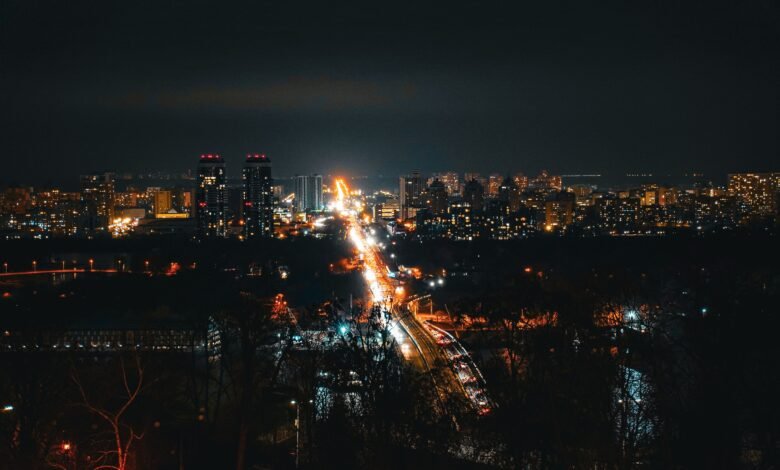
Kyiv woke on Saturday 7 November 2026 without reliable electricity, water or heating after an overnight Russian attack on Ukraine’s energy network, in one of the heaviest bombardments of the capital in months. President Volodymyr Zelenskyy said Moscow fired 172 drones and 36 ballistic missiles at Kyiv and the surrounding regions, striking electricity substations and a bridge over the Dnipro River.
Zelenskyy accused Russia of trying to “plunge Kyiv and the entire country into a blackout”, and said the assault hit 12 regions across Ukraine, with the capital struck hardest. At least five people were injured, including a 14-year-old girl, and repair crews spent Saturday working to restore power, water and heating as temperatures fell and the first winter snow had already reached parts of the country.
| Ukraine Blackouts — Quick Reference Summary | |
|---|---|
| Latest attack | Night of 6–7 November 2026 |
| Weapons reported | 172 drones and 36 ballistic missiles (President Zelenskyy) |
| Regions attacked | 12, with Kyiv hit hardest |
| Kyiv impact | Electricity, water and heating disrupted |
| People injured | At least five, including a 14-year-old girl |
| Key target | Substations linking the Rivne and Khmelnytsky nuclear plants to Kyiv |
| Bridge closed | Northern Bridge (Pivnichnyi) over the Dnipro River |
| Restoration by Saturday | Water supply back to normal; about 60% of apartment buildings reconnected to heating |
| Regions still without power on 7 November | Dnipropetrovsk, Donetsk, Kyiv, Zhytomyr and Kharkiv |
| Previous major attack | 3 November — 289 drones, 17 ballistic missiles and 59 cruise missiles |
| Peace talks | Russia, Ukraine and the US due to meet on Tuesday and Wednesday in Abu Dhabi |
172 Drones and 36 Ballistic Missiles Aimed at the Grid
The overnight attack concentrated on the infrastructure that moves electricity into Kyiv and across central Ukraine. Zelenskyy said the strikes damaged substations in five regions, including Vinnytsia, Zhytomyr, Rivne, Kharkiv and Dnipro, alongside the facilities feeding the capital itself. Russia’s defence ministry said its strikes early on Saturday were aimed at energy and transport targets.
Fires broke out in Kyiv’s Solomianskyi district, and residential buildings, a kindergarten and a non-residential building were damaged or partly destroyed. Three people, including a child, were injured in the capital, according to local authorities, while the wider toll reported across the country reached at least five injured, including the 14-year-old girl.
Ukraine’s air force and energy officials described the scale of the attack as part of a deliberate campaign against the grid rather than a single night’s operation. The strikes followed a week in which Kyiv residents had already faced day-long power cuts and interruptions to their water supply, and emergency outage schedules were already in force in most regions before Saturday’s attack began.
Why the Nuclear-Linked Substations Drew Attention
The most closely watched damage was to substations that link the Rivne and Khmelnytsky nuclear power plants to Kyiv and central Ukraine. Those connections carry electricity from two of the country’s working nuclear plants into the grid that serves the capital, so damage to them threatens supply far beyond the immediate area around each substation.
Zelenskyy said preliminary findings indicated that North Korean KN-23 missiles were used at one of the key energy facilities damaged in the attack. That claim has not been independently confirmed, and technical assessments of the sites hit by ballistic missiles were still continuing on Saturday. Only four of the 36 ballistic missiles fired at Kyiv and the surrounding region were shot down, according to the president.
Energy Minister Denys Shmyhal said there were power cuts in five regions, although he did not give a figure for the number of homes affected. Ukraine’s Ministry of Energy warned that hourly power outage schedules remain in effect in most regions, with capacity restrictions also placed on industry, and that the situation could change rapidly if new attacks follow.
Water, Heating and the Northern Bridge in Kyiv
Kyiv Mayor Vitali Klitschko said the capital faced an “extremely difficult situation” with its energy supply, and that the damage was affecting the operation of the city’s heating and water systems. Power engineers and municipal utility crews were working through Saturday to restore services for residents.
By Saturday, Klitschko said the city’s water supply system was back to operating normally, and that around 60 per cent of the capital’s apartment buildings had been reconnected to the heating system. The recovery was partial, however, and many households remained on scheduled cuts while repairs continued.
The Northern Bridge, a key transport route across the Dnipro, was closed on Saturday while workers repaired damage to the road surface and power lines. The bridge carries traffic between the two banks of the river in the north of the city, and its closure added to the disruption for residents already coping with outages at home.
A Week of Escalating Strikes on Energy Sites
Saturday’s attack capped a week of escalating strikes on Ukraine’s energy system. On 1 November, Russian strikes meant hundreds of thousands of households lost power across four regions, with Dnipropetrovsk among the worst affected. Most customers there had power restored by that Sunday evening, though more than 60,000 remained cut off.
Two days later, on Tuesday 3 November, Russia launched one of its biggest attacks on the country’s infrastructure since the full-scale invasion began. Zelenskyy said that assault involved 289 drones, 17 ballistic missiles and 59 cruise missiles, hitting power plants and substations from Odesa in the south to Rivne in the west. Ukrenergo, the national grid operator, described it as one of the largest attacks on the energy system since the war began, and three of energy company DTEK’s five thermal power plants were forced offline.
On the night of 5–6 November, Russia launched 227 attack drones, including 86 jet-powered Shahed drones, according to Ukraine’s air force. That strike caused outages in seven regions, including Kyiv, Kharkiv, Chernihiv, Vinnytsia, Dnipropetrovsk, Zhytomyr and Zaporizhzhia, with the Kyiv region again the worst affected. DTEK reported that one of its own power stations and substations belonging to Ukrenergo were damaged, and the regional capital of Chernihiv was left without power entirely.
What the Blackouts Mean for Winter and the Abu Dhabi Talks
The timing of the campaign matters because winter is arriving. Cold weather is already adding pressure to a grid running on repairs and rolling schedules, and the polar vortex disruption expected this winter shows how quickly demand can rise when temperatures fall. Hourly outage schedules and capacity limits for industry are now the norm in most regions, and each new strike forces engineers to choose which areas to reconnect first.
The financial strain is also growing. DTEK has now had power stations damaged in successive attacks, Ukrenergo’s substations have been hit repeatedly, and the cost of repairing transmission lines, transformers and generation plants keeps rising while revenue from supply is interrupted. Ukraine’s energy ministry has warned that the situation in the power system may change several times an hour as damage is assessed and new attacks arrive.
European capitals are watching the war’s wider pressure closely, days after the shooting in Krakow’s Main Market Square underlined how quickly security incidents can escalate across the continent. For Ukraine, the immediate question is whether repair crews can keep pace with the strikes before sustained cold weather sets in.
Diplomatically, the attacks landed days before negotiators from Russia, Ukraine and the United States are due to meet on Tuesday and Wednesday in Abu Dhabi for talks aimed at ending the war. Zelenskyy said Moscow’s preparations for the talks involved pummelling a city of millions with ballistic missiles. As of Saturday, the talks were still scheduled to go ahead, and Ukraine has said it supports a full ceasefire on energy targets, including its own battered power grid, while Moscow has shown no willingness to agree to one.
Frequently Asked Questions
Q: How many regions were hit in the 7 November attack?
A: Twelve regions came under attack overnight, according to President Zelenskyy, with Kyiv hit hardest. Substations were damaged in five regions, including Vinnytsia, Zhytomyr, Rivne, Kharkiv and Dnipro.
Q: How many people were injured?
A: At least five people were injured, including a 14-year-old girl, according to the Guardian’s reporting of the attack. Three people, including a child, were injured in Kyiv itself, according to local authorities.
Q: Is Kyiv’s water supply working again?
A: Yes, according to Mayor Vitali Klitschko, the city’s water supply system was back to operating normally by Saturday. About 60 per cent of apartment buildings had also been reconnected to heating, though many households remained on scheduled power cuts.
Q: What happened in the 3 November attack?
A: Russia fired 289 drones, 17 ballistic missiles and 59 cruise missiles at power plants and substations across Ukraine, from Odesa to Rivne. Ukrenergo called it one of the largest attacks on the energy system since the full-scale invasion began, and three of DTEK’s five thermal power plants were forced offline.
Q: When are the Abu Dhabi talks?
A: Negotiators from Russia, Ukraine and the United States are due to meet on Tuesday and Wednesday in Abu Dhabi. The talks are aimed at ending the war, and Ukraine has said it supports a ceasefire covering energy targets.
Myth-Busting: What the Blackouts Do and Do Not Mean
Myth: The blackouts mean Kyiv has no power at all.
Fact: Kyiv is operating on hourly outage schedules, not a total shutdown. Water was restored by Saturday and about 60 per cent of apartment buildings were reconnected to heating, while repairs continue.
Myth: The strikes only hit Kyiv.
Fact: Twelve regions were attacked overnight, and substations were damaged in five regions beyond the capital, including Vinnytsia, Zhytomyr, Rivne, Kharkiv and Dnipro.
Myth: The attack means the Abu Dhabi talks are off.
Fact: As of Saturday, the talks were still scheduled for Tuesday and Wednesday. No cancellation had been announced, and Ukraine has said it supports a ceasefire on energy targets.