
Hailey Bieber Reveals PMDD Struggle After Giving Birth: What Is Premenstrual Dysphoric Disorder?

Hailey Bieber has spoken openly about struggling with premenstrual dysphoric disorder (PMDD) after giving birth to her son, Jack Blues, describing the experience as a “lonely journey” in an interview with Women’s Wear Daily published on 30 October 2026. The Rhode founder, 29, said she was diagnosed with the condition about six months after welcoming Jack on 22 August 2024, and her disclosure has put a spotlight on a severe menstrual health condition that affects a small but significant share of women of childbearing age.
Bieber told Women’s Wear Daily: “After I had my son, I struggled with that a bit, and there’s just not a lot of conversation or research around it.” She said her symptoms felt far more intense than the premenstrual symptoms she had known before pregnancy, easing once her period began and improving gradually over time. She had previously discussed the diagnosis during an appearance on the SHE MD podcast in March.
Her comments arrive alongside a funding commitment from her beauty brand Rhode, which will donate $5 million over three years to the Foundation for Women’s Health, a non-profit research fund working to close gaps in women’s health research. Bieber said becoming a mother deepened her interest in women’s health, and that she feels frustrated by the lack of research and awareness around conditions like PMDD.
Hailey Bieber PMDD — Quick Reference Summary
| Detail | What is known |
|---|---|
| Who spoke out | Hailey Bieber, 29, founder of beauty brand Rhode |
| What she revealed | She struggled with premenstrual dysphoric disorder (PMDD) after giving birth |
| When diagnosed | About six months after giving birth, as she told Women’s Wear Daily |
| Her son | Jack Blues Bieber, born 22 August 2024; father is singer Justin Bieber |
| Where she spoke | Women’s Wear Daily interview published 30 October 2026; earlier on the SHE MD podcast in March |
| What PMDD is | A severe form of premenstrual syndrome (PMS), affecting fewer than 5% of women of childbearing age, according to the US Office on Women’s Health |
| Funding announced | Rhode to donate $5 million over three years to the Foundation for Women’s Health |
What Bieber Described as a “Lonely Journey” After Childbirth
Bieber’s account centres on the months after Jack’s birth, when the emotional symptoms she experienced in the run-up to each period felt noticeably different from anything she had felt before. She described the lead-up to her period as far more intense than her previous experience of premenstrual symptoms, and said the feelings would begin to ease once her period started.
The model and businesswoman has spoken about her health before. She suffered a mini-stroke in 2022, and has also said she was born with a congenital heart defect known as patent foramen ovale. Her latest disclosure, however, is about a condition that is tied to the menstrual cycle rather than a single event, and one she says too few people talk about.
Bieber stressed that the experience should not be confused with postpartum depression. PMDD is a separate condition linked to the menstrual cycle, even when it first becomes noticeable after childbirth. Her message, repeated across the coverage of her interview, is that the lack of conversation and research around women’s health leaves many people feeling alone with symptoms they do not recognise.
PMDD Is Not “Bad PMS”: How the Condition Works
Premenstrual dysphoric disorder is a severe form of premenstrual syndrome. The US Office on Women’s Health states that fewer than 5% of women of childbearing age experience PMDD, while as many as three in four women report some premenstrual symptoms at some point in their lives. The difference is one of severity and impact: PMDD symptoms can disrupt work, relationships and daily life in a way ordinary PMS does not.
The NHS describes PMDD as severe emotional and physical symptoms before a period, with similar symptoms to PMS but far more intense. Symptoms usually start around one to two weeks before each period and improve a few days after the period begins. The pattern, rather than any single symptom, is the clue that separates PMDD from other conditions.
Researchers do not know exactly what causes PMDD, but it has been linked to being very sensitive to changes in hormones during the menstrual cycle. The Office on Women’s Health notes that hormone levels fall dramatically after ovulation when a woman is not pregnant, and that these changing levels may affect some women more than others. A family history of depression, or a personal history of postpartum depression or depression, may make PMS and PMDD more likely.
Spotting the Pattern: Symptoms, Diagnosis and When to Seek Help
The emotional symptoms of PMDD can include feeling depressed or hopeless, anxious or worried, angry or irritable, and having less interest in things a person normally enjoys. Physical symptoms include breast tenderness, joint and muscle pain, tiredness, changes in sleep, bloating and headaches. The NHS also lists feeling very anxious, angry, depressed or even suicidal among the possible symptoms, and advises calling 999 or going to A&E if someone with PMDD is feeling suicidal.
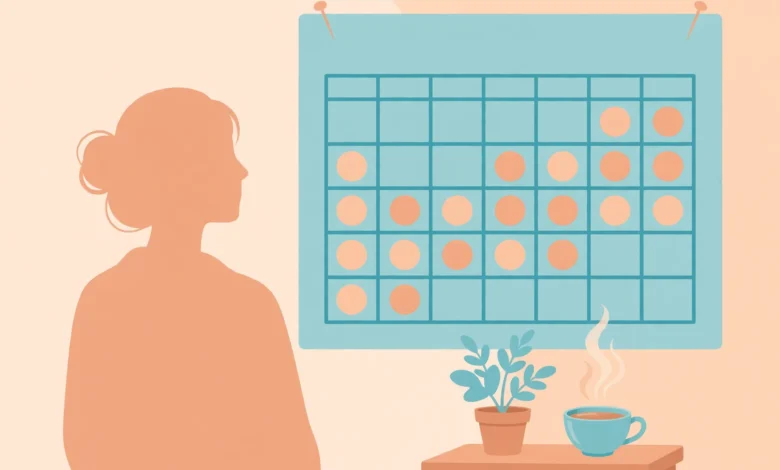
There is no single test for PMDD. The NHS explains that a GP will review symptoms and how much they affect daily life, and that symptoms need to recur each month over at least two months. Keeping a symptom diary for at least two menstrual cycles helps both the person and their GP see the pattern. The Office on Women’s Health gives the same advice for PMS: track symptoms for a few months and take that record to a doctor.
That tracking matters because PMDD overlaps with other conditions. About half of women who need relief from premenstrual symptoms also have another health problem, such as depression or an anxiety disorder, that may get worse in the time before a period. A clear diary of when symptoms start and stop is often what allows a GP to tell PMDD apart from depression or anxiety that simply worsens premenstrually.
Treatment Options the NHS Recommends for PMDD
Treatment for PMDD usually focuses on helping manage symptoms, and the right choice depends on the person and should be discussed with a GP. The NHS lists several main options. Medicines for anxiety or low mood, usually a type of antidepressant called an SSRI, are commonly offered. Painkillers or anti-inflammatory medicines such as ibuprofen or naproxen can help joint or muscle aches. Hormonal treatments, such as the combined contraceptive pill, help manage hormone levels, and talking therapies such as cognitive behavioural therapy (CBT) can help people find ways to manage their feelings.
As with other serious conditions that need specialist care, such as the British patient flown to the UK for specialist Ebola treatment, early medical attention matters.
If these treatments have not helped, surgery may be considered, with the aim of stopping PMDD symptoms by stopping periods. That can involve removing the ovaries, fallopian tubes or womb, and it is not suitable for anyone who wants to become pregnant. Alongside medical treatment, the NHS and the Office on Women’s Health both note that regular aerobic exercise, healthy eating, enough sleep and stress management can help ease premenstrual symptoms, although they are not a substitute for medical care.
Why Bieber Says Women’s Health Research Lags Behind
Bieber’s frustration with the state of women’s health research is the thread running through her interview. “I feel really drawn to women’s health,” she said. “As a woman, I feel frustrated by the lack of research, the lack of awareness, the lack of certain conversation around it.” Her brand’s $5 million commitment to the Foundation for Women’s Health is, according to reports of the interview, Rhode’s largest philanthropic investment to date.
The funding is aimed at the research gaps Bieber herself encountered: conditions that affect millions of women but attract limited study and little public discussion. For readers who recognise their own experience in her description, the practical advice from the NHS remains the same — track symptoms, speak to a GP, and seek urgent help if symptoms include thoughts of suicide. Bieber’s disclosure has done what celebrity health stories sometimes do best: it has given a name to an experience many people have had without knowing what to call it.
Frequently Asked Questions About PMDD
What is PMDD?
PMDD, or premenstrual dysphoric disorder, is a severe form of premenstrual syndrome. The NHS describes it as severe emotional and physical symptoms before a period that can disrupt work, social life and relationships.
What did Hailey Bieber say about PMDD?
In a Women’s Wear Daily interview published on 30 October 2026, Bieber said she struggled with PMDD after giving birth to her son Jack Blues in August 2024, and was diagnosed about six months after giving birth. She called it a “lonely journey” and said there is not enough conversation or research around it.
How is PMDD different from PMS?
PMDD symptoms are similar to PMS but much more intense, and they can have a much greater negative impact on everyday life. The NHS notes that symptoms can include feeling very anxious, angry, depressed or suicidal, alongside headaches, joint and muscle pain, overeating and problems sleeping.
How is PMDD diagnosed?
There is no single test. A GP reviews symptoms and how much they affect daily life, and the NHS recommends keeping a symptom diary for at least two menstrual cycles so the recurring monthly pattern can be seen.
What treatments are available for PMDD?
The NHS lists SSRI antidepressants, painkillers such as ibuprofen or naproxen, hormonal treatments such as the combined contraceptive pill, and talking therapies such as CBT. Surgery to stop periods is considered only if other treatments have not helped.
Is PMDD the same as postpartum depression?
No. PMDD is a separate condition tied to the menstrual cycle, even when it first becomes noticeable after childbirth. Postpartum depression is a different condition, although a personal history of postpartum depression may make PMS and PMDD more likely.



One Comment